Top Massachusetts Roofing Contractors
Get Estimate
Trusted Roofing Company in Massachusetts Since 2004.
Master Roof is a trusted residential roofer in Massachusetts, offering expert full roof replacement and installation. We install high-performance, energy-efficient roofing systems built to endure New England’s seasonal extremes, boosting curb appeal and long-term value. We deliver top-notch workmanship - always using premium quality materials like GAF & Owens Corning asphalt shingles for our roof replacement projects. Flexible financing makes upgrading your roof simple.
Top-Rated Roofers
5 Start Reviews & excellent Massachusetts clients testimonials
Local Roofing Experts
We know Massachusetts's weather and roofing needs
20+ Years of Experience
Experienced installing entire roofing systems & skylights
Free Estimate and Fast Service
Accurate roofing quotes in just a few minutes
Fully Licensed & Certified
Certifications from GAF, Owens Corning and more.
Best Roofing Materials & Warranty
Best roofing materials: asphalt, metal, rubber & rolled roofing
Types of Roofing Material in Massachusetts
The choice of roofing materials available to Massachusetts homeowners is abundant. Asphalt shingles have traditionally been the most common choice due to their cost-effectiveness and durability. Options like slate, metal, or even wood shakes are becoming more popular for those seeking longevity and a unique aesthetic, though each comes with its own set of maintenance requirements and costs.
Asphalt Shingles
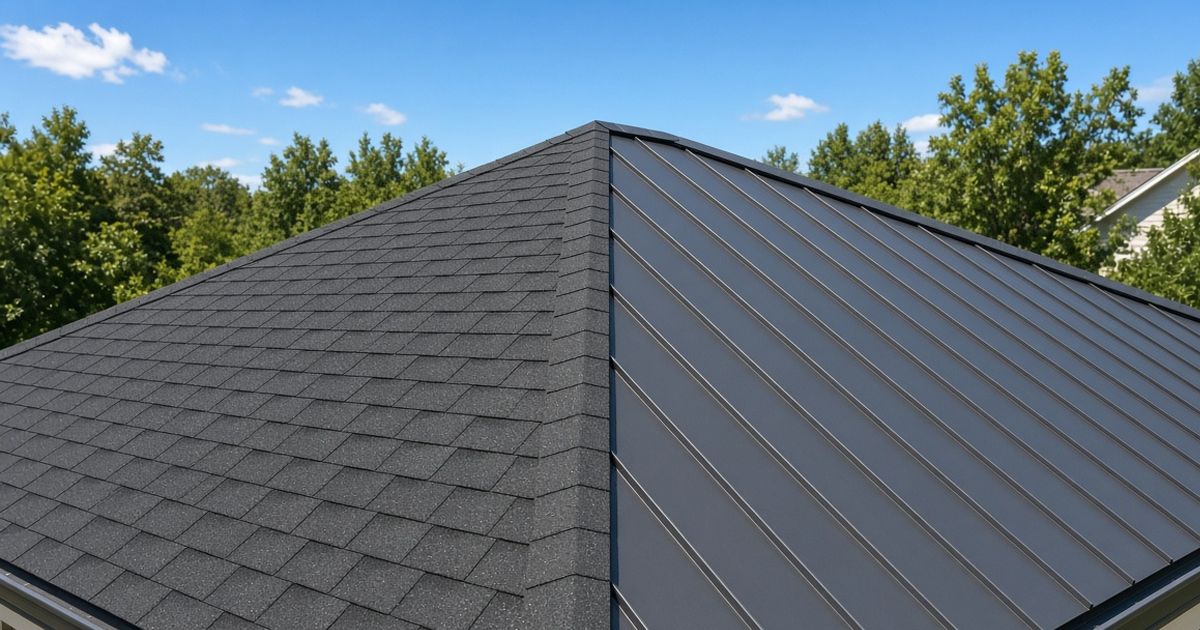
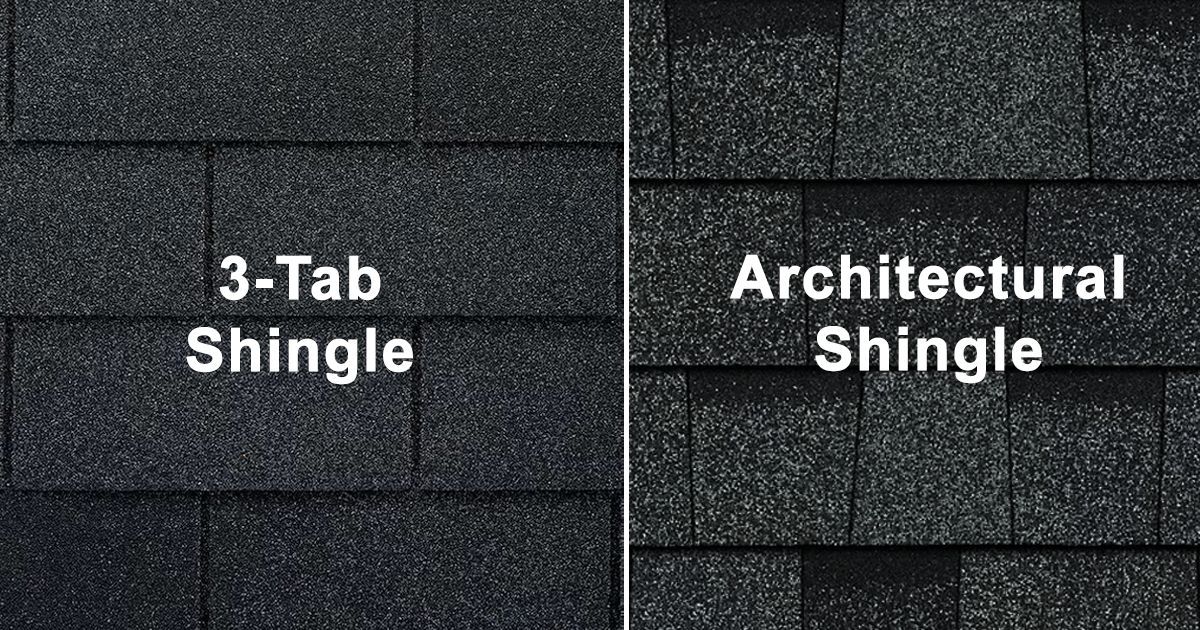
Asphalt Shingles are the most common choice due to their affordability and variety. They come in three-tab, dimensional, and luxury styles, offering different levels of durability and appearance.
- Pros: Cost-effective, easy to install, available in various colors and styles, good for most climates.
- Cons: Shorter lifespan compared to other materials and can be susceptible to wind and hail damage.
Metal Roofing
Metal Roofing is a great choice for its longevity, with materials like aluminum, steel, copper, and zinc offering up to a century of service. It's lightweight, fire-resistant, and energy-efficient, but it's also more expensive upfront.
- Pros: Extremely durable, can last 40-100+ years, lightweight, fire-resistant, and energy-efficient due to reflective properties.
- Cons: Higher initial cost, can be loud during rain if not properly insulated, installation may require specialized skills.
Slate Roofing
Slate roofs are prized for their natural beauty and durability, lasting from 75 to 200 years. However, their weight and cost make them less common for residential homes.
- Pros: Natural stone material, incredibly durable (75-200 years), low maintenance, enhances home value.
- Cons: Very heavy, requires structural support, expensive, and complex installation.
Cedar Shingles and Shakes
Cedar Shingles and Shakes provide a rustic look but often require more maintenance, especially in humid climates. They can be treated for fire resistance, enhancing their appeal.
- Pros: Natural aesthetic, good insulation properties, can be treated for fire resistance.
- Cons: Not suitable for all climates, especially those with high moisture or fire risk, requires regular maintenance.
Clay and Concrete Tiles
Clay and Concrete Tiles are known for their longevity and fireproof nature and are ideal for hot climates. Their installation can be costly due to the need for additional structural support.
- Pros: Long lifespan (50-100+ years), fireproof, durable in hot climates, aesthetically pleasing.
- Cons: Very heavy, installation can be costly due to structural considerations, and higher initial cost.
EPDM Roofing
EPDM (Rubber) Roofing is popular for flat roofs, offering a low-cost, durable option that's easy to repair. It's commonly used in commercial settings but is often used in residential flat roofs as well.
- Pros: Good for flat roofs, low cost, durable, easy to repair, good for commercial applications.
- Cons: Must be installed by professionals, can be susceptible to damage from heavy traffic or sharp objects.
Synthetic or Composite Shingles
Synthetic or Composite Shingles mimic the look of other materials like wood or slate without the weight or maintenance. They're durable but can be pricey
- Pros: Made to mimic the look of wood, slate, or tile but with less weight and maintenance, durable.
- Cons: More expensive than asphalt, and not as long-lasting as real slate or tile.
Rolled Roofing
Rolled Roofing is the cheapest and quickest to install and is often used on low-slope roofs. However, it has a shorter lifespan and is less visually appealing.
- Pros: Cheapest option, quick to install, suitable for low-slope roofs.
- Cons: Short lifespan (5-8 years), not as aesthetically pleasing, less durable.
In Massachusetts, while asphalt shingles remain a popular choice for their balance of cost and effectiveness, metal roofs are increasingly favored for their longevity and energy efficiency. Homeowners looking for expert advice and installation should consult with professionals like those at Master Roof. We can provide valuable insights and tailored solutions that not only enhance the aesthetic appeal but also ensure the roof is well-equipped to handle the state's challenging weather conditions. Whether it's for durability, cost-effectiveness, or aesthetic preference, understanding these roofing materials can help make an informed decision for a home that stands strong against the elements.
Accessory Roofing Materials
Roof Decking
The foundation of any roof begins with the decking, which is typically made from plywood or oriented strand board (OSB). This layer not only supports the roofing materials but also plays a critical role in the structural integrity of the roof. In Massachusetts, ensuring properly installed decking is an important step for dealing with heavy snowfalls in the winter.
Hip & Ridge Shingles
These are specially designed shingles used to cover the hips (the external angle formed by the intersection of two sloping roof planes) and ridges (the peak line where two roof surfaces meet at the top) of a roof. They provide a finished look and additional weather protection at these critical points..
Gutters and Downspouts
Gutters and downspouts are integral for directing rainwater away from the house, preventing foundation damage and basement leaks. Materials like aluminum, copper, or vinyl are often used, each offering different levels of durability and aesthetic appeal.
Ridge Vent
This type of vent is installed at the peak of a roof to allow hot air and moisture to escape from the attic space, promoting better ventilation. It's often integrated into the ridge shingles for a seamless appearance.
Starter Shingles
These are the first row of shingles installed at the eaves (the lower edge of a roof) or along the rake (the sloped edge of a gable roof). They are typically cut in half lengthwise to provide an extra layer of protection where water runoff is heaviest.
Hip Vent
Similar to ridge vents but designed for the hip areas of the roof. They help in ventilating the roof structure, especially in complex roof designs where air needs to circulate through different slopes.
Drip Edge
A strip of metal usually made of aluminum or galvanized steel installed along the eaves and rakes of a roof. It directs water away from the fascia and into the gutters, preventing water from seeping under the shingles.
Ice and Water Shield
An ice and water shield is a self-adhering, rubberized asphalt membrane that can be installed in vulnerable areas like eaves, recommended to extend 6 feet up in New England, valleys, all penetrations such as chimney and wall flashing, bathroom vents, boot pipes, and on lower pitch roofs. This prevents water from seeping under the shingles due to ice buildup, offering a robust defense against water damage.
Underlayment
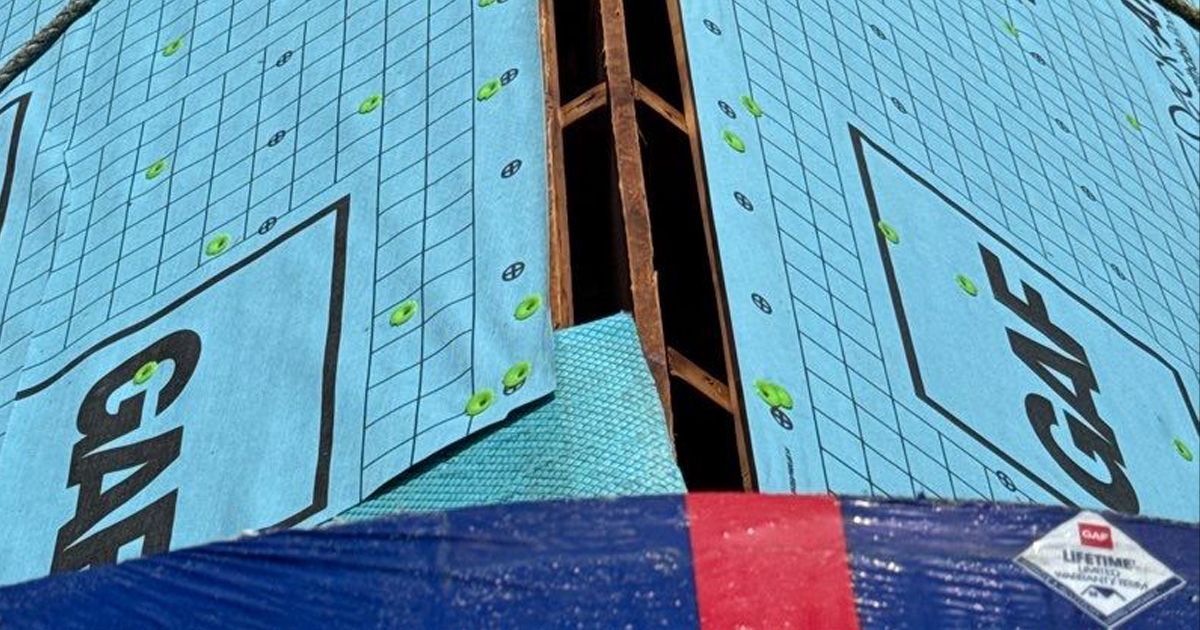
The underlayment goes over the roof decking and under the final roofing materials. This layer acts as a secondary barrier against water infiltration to safeguard the decking from potential leaks. Traditional felt paper offers a cost-effective solution but is less durable in comparison. Synthetic underlayment provides superior moisture protection and often comes with self-sealing properties, which are ideal for the variable weather we see in Massachusetts. This should be installed after the ice water shield. Synthetic underlayment doesn't come self-sealing like the ice water shield. Master Roof uses plastic cap staples and plastic cap nails avoiding common mistakes of many contractors.
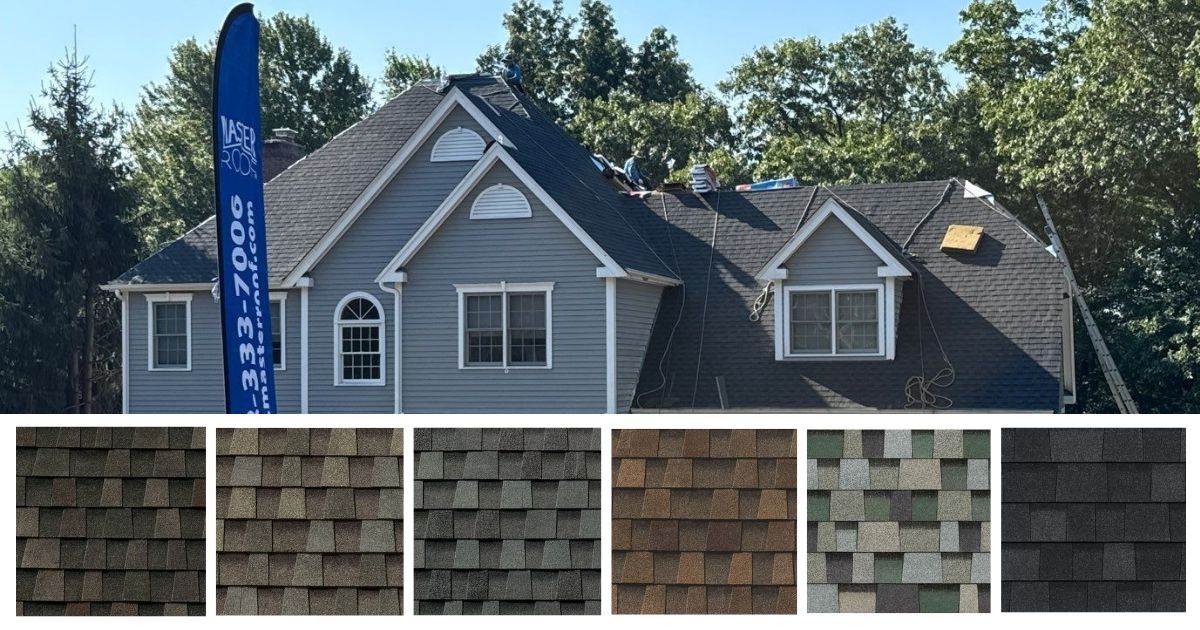
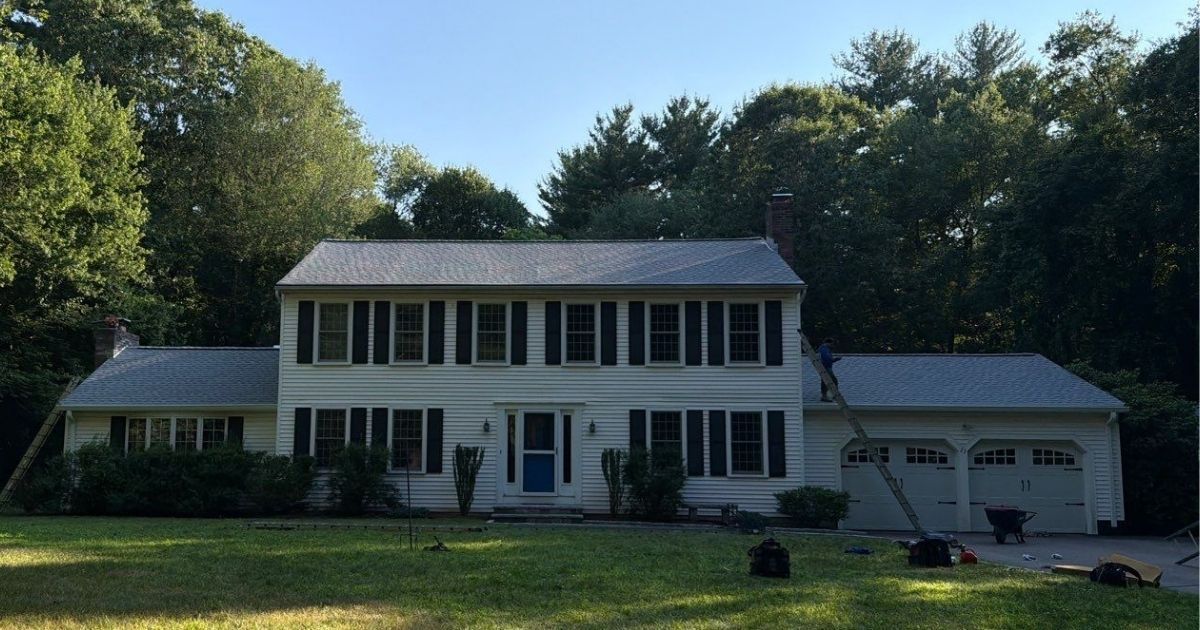
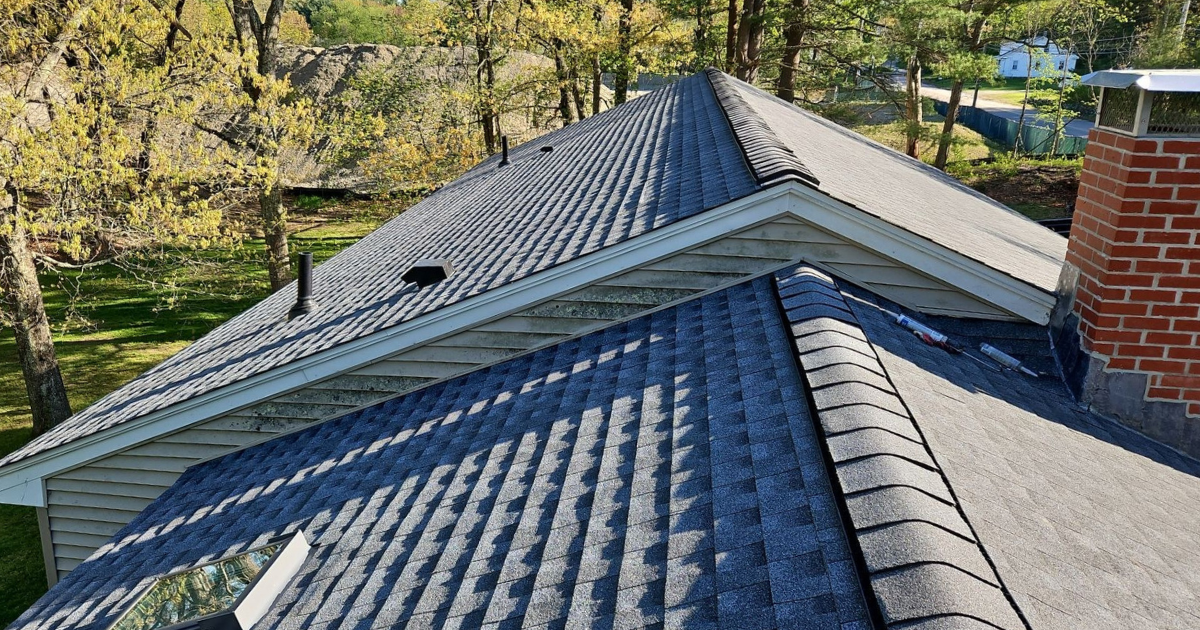
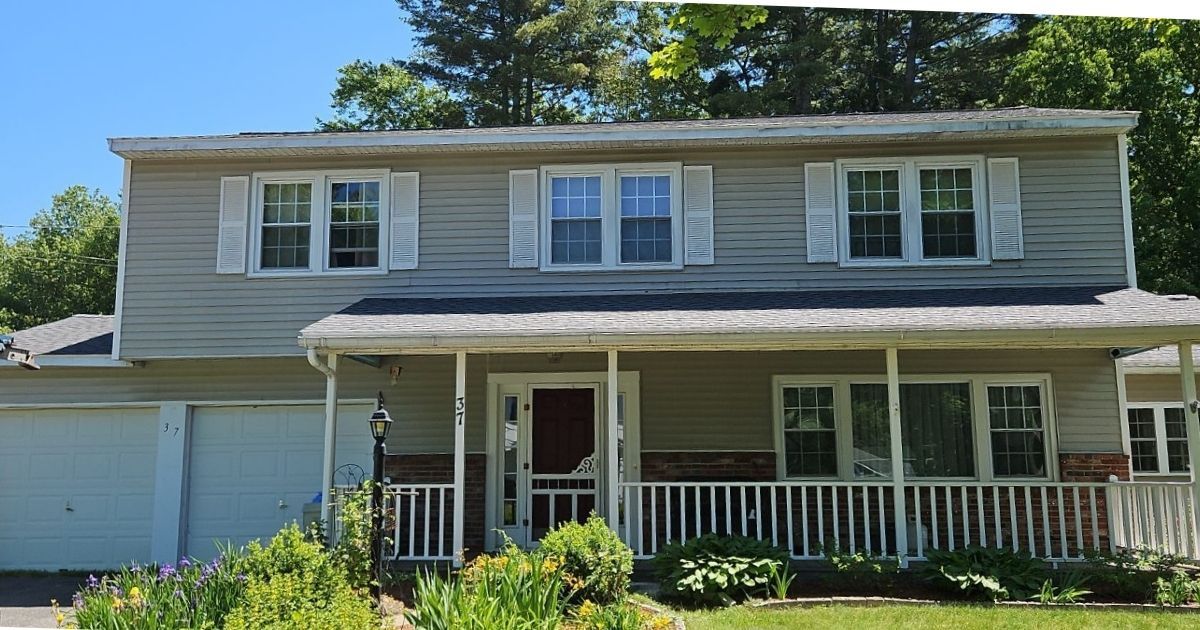
Master Roof Roof Replacement Portfolio
How Much Does a New Roof Cost?
Get an estimate for your new roof in just a few minutes. Just enter your address!
Massachusetts Roof Replacement FAQ
How do I know I need a new roof?
Here are some warning signs that indicate it might be time for a new roof:
- Your Roof is Older Than 20-30 Years
- Missing, Damaged, or Curled Asphalt Shingles
- Leaks and Water Stains
- Sagging Roof
- Excessive Moss or Algae Growth
- Energy Efficiency Issues
To learn more read our blog on 7 Signs your Roof May Need to be Replaced or Repaired
How much does it cost to replace a roof in Massachusetts?
Typically, replacing a roof can cost between $10,000 and $36,000 in Massachusetts using mid-grade materials like asphalt shingles. For instance, a 2,000 sq. ft. roof could cost between $10,000 to $20,000 for mid-grade materials.
Read this article for more information.
How long will it take to replace the roof?
We can replace a roof in 1-3 days. The entire process generally takes 2-3 weeks from initial contact to completed roof.
What time of year is best to replace a roof?
Fall
Fall. Fall is the universal go-to season for roof replacement. With spring's mild temperatures and early summer's weather consistency, fall is commonly referred to as the best time of year to replace your roof.
How long does a roof generally last?
Roof lifespan depends on multiple factors. Asphalt shingles typically last 30-50 years per the American Society of Home Inspectors. Additionally, roofing warranties vary; scrutinize them to understand the manufacturer's liability for premature product failure.
Are roofing warranties transferrable?
Roofing warranties can be transferred once to new homeowners upon sale. Inform the new owners to transfer the warranty into their name to keep it valid and effective.
Why do I need attic insulation?
You will save money in the long run. Attic insulation can cut heating and cooling costs by 15-50%, blocking heat loss in winter and solar gain in summer. It also lowers your carbon footprint, with blown-in cellulose being eco-friendly. Proper insulation protects your roof by maintaining lower deck temperatures, extending shingle life and reducing ice dams. Additionally, good ventilation prevents moisture buildup, preserving insulation efficacy and structural integrity while avoiding mold and mildew.
Should I repair or replace my roof?
Master Roof thorough inspection process will guide the answer. We will identify all problems, big or small and we will work together to develop a plan that fits yourneeds and budget
Is Master Roof fully licensed, certified, and insured?
Yes we are. We are a fully certified company, ready to provide proof of licensing and insurance to safeguard your property, your family, and our team's well-being, along with our equipment and vehicles.
What is the best brand of shingles?
There are several excellent brands of shingles, but we recommend GAF and Owens Corning products. Learn more here: https://www.masterroof.com/gaf-roofing, https://www.masterroof.com/gaf-roofing
Is roof assessment same as roof inspection?
A roof inspection is a thorough assessment of a roof's condition, materials, and components, while a roof assessment can include a five-year forecast and recommendations for maintenance.
What is the best roofing material for Massachusetts?
Asphalt shingles are the best blend between aesthetic, durability, and cost. Compared to slate shingles, asphalt shingle roofs have a shorter life expectancy. With that, they are substantially less expensive. The traditional New England home aesthetic relies on history of wooden shingles.
What time of year is cheapest to replace roof?
No matter when you decide to get one, a new roof is a large investment. However, winter is usually the cheapest time of year to replace your roof.
What is the most expensive part of a new roof?
Labor and installation are crucial components of the overall cost of a new roof. Professional installation ensures the durability and effectiveness of your roof, but several factors influence these costs: Labor Complexity: The complexity of your roof's design significantly affects labor costs.
What color roof increases home value?
Are there specific roof colors that increase home value? Neutral colors like black, gray, and brown generally appeal to a wider range of buyers, potentially increasing home value. Earth tones and well-chosen bold colors can also enhance curb appeal and value.
If you are looking for professional roofing services in Massachusetts, get in touch with Master Roof or stop by their office where they can show you a variety of roof material types to use in your next roofing project. We used the best roofing materials on the market including GAF and Owens Corning.