Understanding Understanding Different Roof Styles for your New England Home
When it's time to replace or build a new roof, one of the most important decisions you'll make is choosing the right roof style for your home. The roof isn't just about aesthetics - it affects your home's structural integrity, energy efficiency, weather performance, and long-term value.
In New England, this decision carries extra weight. Massachusetts homeowners face some of the most demanding roofing conditions in the country - heavy snow loads, ice dams, nor'easters, humid summers, and freeze-thaw cycles that can stress even the best-built roofs. The roof style you choose needs to work with New England's climate, not against it.
At Master Roof, we've helped thousands of homeowners across Milford, Hopkinton, Northborough, Grafton, Westborough, and communities throughout MetroWest and Central Massachusetts choose the right roof for their specific home. In this guide, we'll walk you through the most common roof styles, their pros and cons, and how each performs in the New England environment.
Why Roof Style Matters in New England
Before we dive into specific styles, it's worth understanding why roof design is especially critical in our region:
- Snow and Ice Loads - Massachusetts roofs must handle significant snow accumulation. The pitch (slope) of your roof directly affects how snow slides off versus accumulates.
- Ice Dams - A leading cause of interior water damage in New England, ice dams form when warm attic air melts rooftop snow, which then refreezes at the cold eave edge. Roof style, ventilation, and insulation all play a role.
- Wind -Nor'easters and coastal storms bring powerful winds. Certain roof shapes are more aerodynamic and wind-resistant than others.
- Rain and Moisture - New England averages 45–50 inches of rainfall annually. Proper slope and drainage are essential.
- Historic Architecture - Many Massachusetts homes reflect Colonial, Cape Cod, Federal, Victorian, and Craftsman architectural traditions, each with its own characteristic roof style.
Understanding your roof style helps you make better decisions about materials, ventilation, insulation, and maintenance — all areas where Master Roof's GAF-certified experts can guide you.
The Most Common Roof Styles in New England
1. Gable Roof (Peaked Roof)
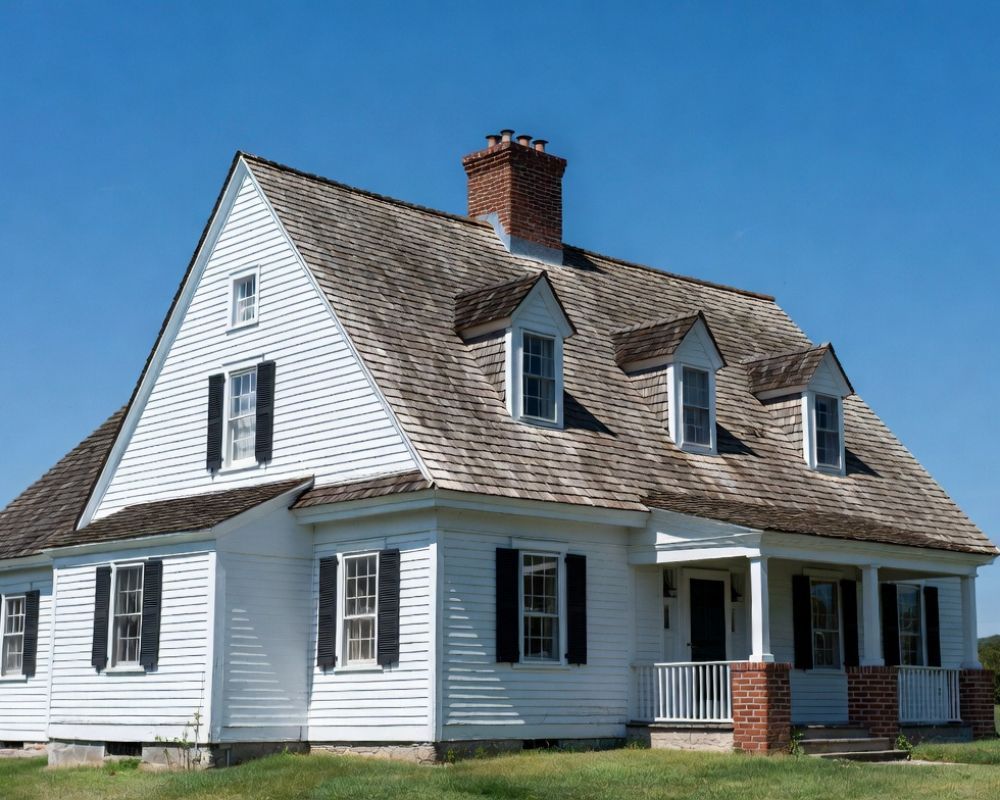
What it is: The gable roof is the most iconic and widely recognized roof style in America - and throughout New England. It features two sloping sides that meet at a central ridge, forming a triangular shape (the "gable") at each end of the building.
Why it's popular in Massachusetts: The gable roof's steep pitch is perfectly suited for New England winters. Snow slides off more readily than on low-slope roofs, reducing ice dam risk and structural load. The simple geometry also makes gable roofs easier and less expensive to build and maintain.
You'll find gable roofs on:
- Traditional Colonial homes throughout MetroWest
- Cape Cod-style homes in Milford, Holliston, and Medway
- Ranch homes across Central Massachusetts
- Modern new construction throughout the region
Pros:
- Excellent snow shedding on steeper pitches
- Simple, cost-effective construction
- Easy to ventilate properly
- Maximizes attic space
- Suits a wide range of architectural styles
- Works well with virtually all roofing materials
Cons:
- Gable ends can be vulnerable to wind uplift in severe storms
- Overhangs need proper bracing in high-wind zones
- Less architectural complexity than some styles
Best roofing materials for gable roofs in MA: GAF Timberline HDZ® architectural shingles are an excellent choice for gable roofs in Massachusetts, offering outstanding wind resistance (up to 130 mph with proper installation), algae protection, and a 30-year to Limited Lifetime warranty.
2. Hip Roof
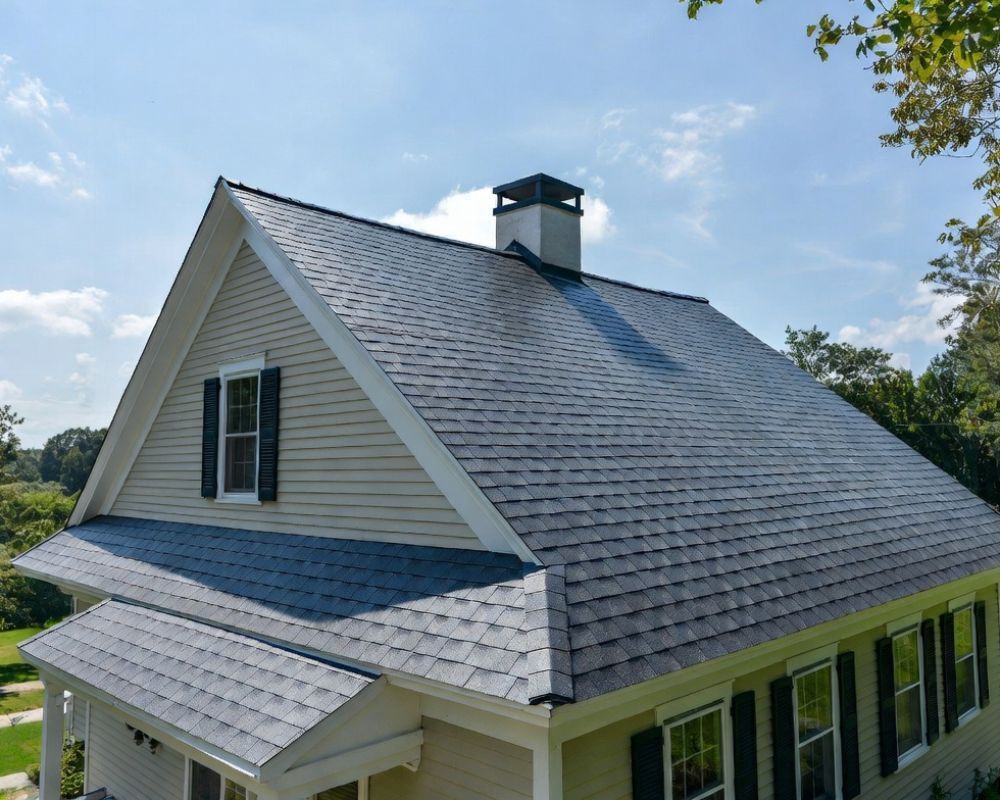
What it is: A hip roof has four sloping sides - no vertical gable ends. All four sides slope downward to the walls, meeting at a central ridge or peak. The result is a roof with a more complex geometry but a distinctly finished, architectural appearance.
Why it's popular in Massachusetts: Hip roofs are found on many Colonial Revival, Four-Square, and Craftsman-style homes throughout MetroWest and Central Massachusetts. They're also common on ranch and split-level homes built in the mid-20th century.
From a performance standpoint, hip roofs offer superior wind resistance compared to gable roofs - the absence of flat gable ends means there's less surface for wind to catch. This makes them an excellent choice for homes in more exposed locations.
Pros:
- Excellent wind resistance - all sides slope away from wind
- More stable structure than gable roofs
- Great curb appeal and architectural character
- Consistent eave overhang protects all walls equally
- Good snow-shedding on steeper pitches
Cons:
- More complex to build and repair - higher labor cost
- Less attic space than a gable roof
- More valleys and intersections = more potential leak points
- Ventilation can be more challenging to engineer
New England performance note: Hip roofs perform exceptionally well in Massachusetts's wind events. The additional valleys, however, require proper flashing and ice-and-water shield installation - something Master Roof's GAF-certified crews execute on every project.
3. Gambrel Roof (The "Barn Roof")
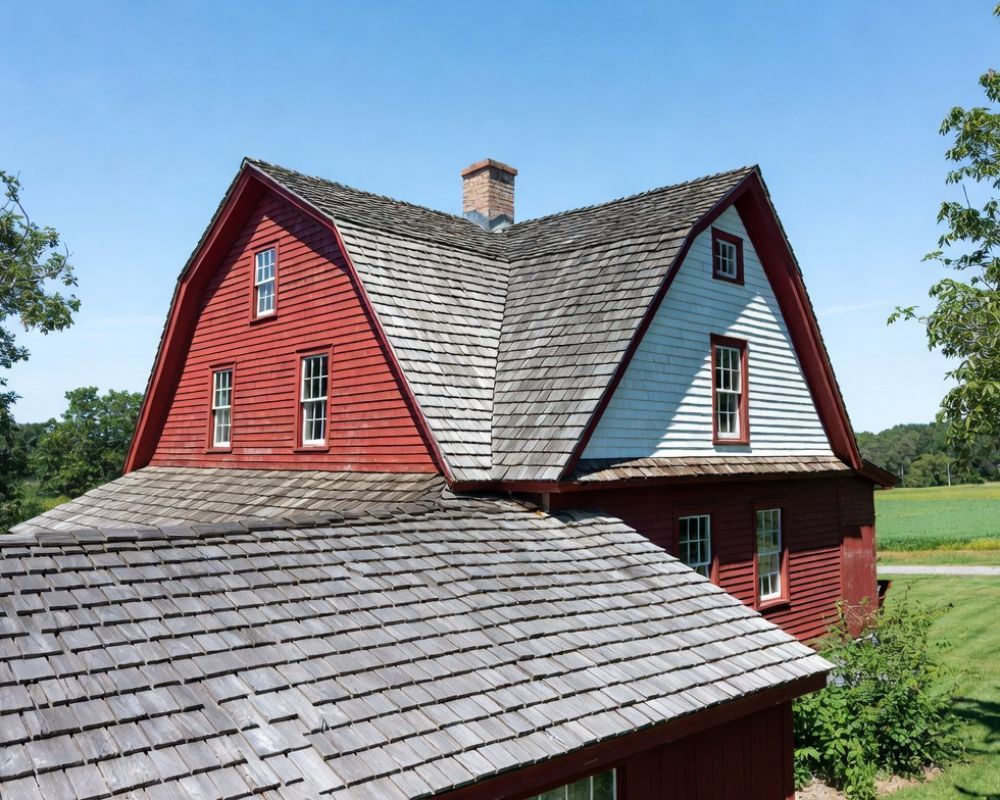
What it is: The gambrel roof is a two-sided roof with two distinct slopes on each side - a shallow upper slope and a steeper lower slope. Most commonly associated with Dutch Colonial architecture and traditional New England barns, the gambrel roof is a beloved regional style.
Why it's iconic in New England: The gambrel roof has deep roots in Massachusetts architectural history. Dutch Colonial homes with gambrel roofs are found throughout towns like Hopkinton, Upton, Northborough, and Grafton. The style maximizes upper-floor living space - the steep lower slope creates usable rooms or storage in what would otherwise be attic space.
Pros:
- Maximizes upper-floor or attic living space
- Iconic New England architectural character
- The steep lower slope sheds snow effectively
- Can be more economical to frame than a hip roof
Cons:
- The shallow upper slope can accumulate snow and ice
- The horizontal break (knee wall) is a common leak and rot point
- Requires careful ventilation design
- More complex to reshingle than a simple gable
Important for Massachusetts homeowners: The transition between the upper and lower slopes on a gambrel roof - known as the eave break - is a critical area that requires ice and water shield, proper flashing, and attention to ventilation. Master Roof has extensive experience with gambrel roofs throughout MetroWest and ensures this vulnerable transition is properly protected.
4. Mansard Roof
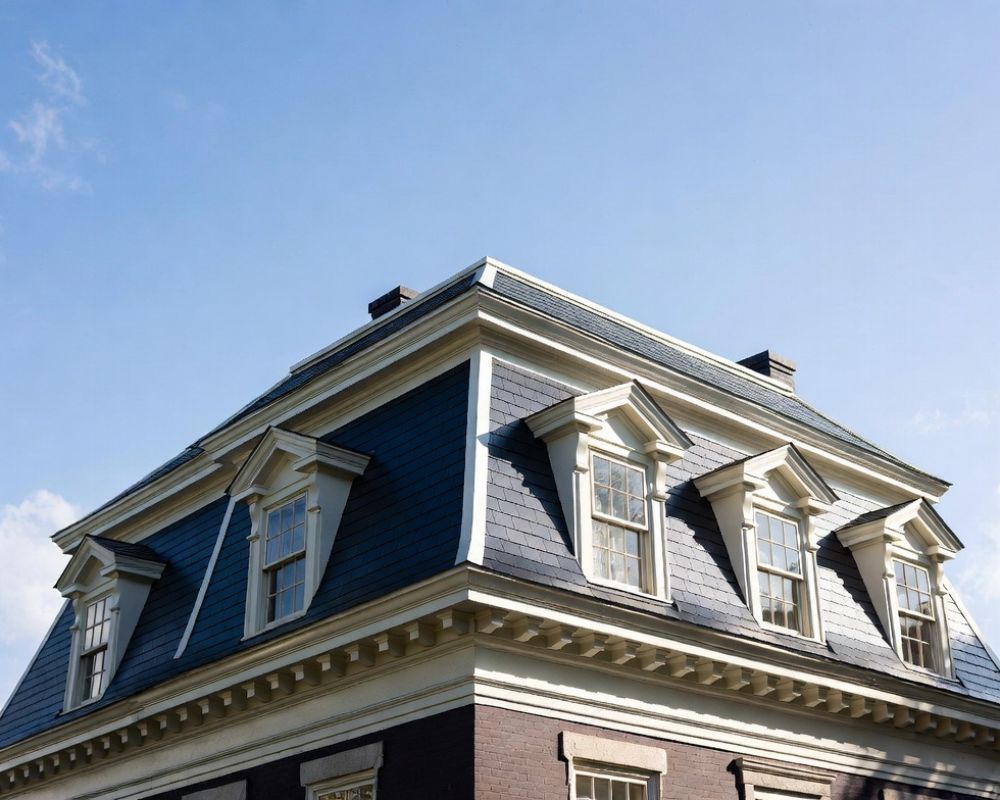
What it is: The mansard roof (also called a French roof) is a four-sided gambrel-style roof with two slopes on all four sides. The lower slope is very steep - often nearly vertical - while the upper portion is nearly flat. The lower section frequently features dormer windows that add light and living space to the upper floor.
Where you'll find it in Massachusetts: Mansard roofs are found on many Victorian and Second Empire-style homes throughout older Massachusetts communities. You'll see them on historic homes in town centers across MetroWest and on stately older properties in communities like Milford, Millis, Medfield, and Bellingham.
Pros:
- Creates a nearly full upper floor of usable living space
- Architecturally stunning - historically significant in MA
- Dormers add natural light to upper rooms
- The steep lower slope performs well in wind
Cons:
- The low-pitched upper section is highly vulnerable to ice and water infiltration
- Requires flat or low-slope roofing materials on the upper section
- Complex dormers create many flashing points - each a potential leak source
- Higher maintenance requirements than simpler roof styles
- Among the most complex roofs to replace or repair
Master Roof expertise: Mansard roofs require a roofing contractor with experience in both steep-slope and low-slope roofing systems. The upper flat section often requires modified bitumen, TPO, or EPDM membrane, while the steep lower section can use traditional shingles. Master Roof has the expertise and GAF product line to handle both systems on the same project.
5. Cape Cod Roof (Saltbox Variation)
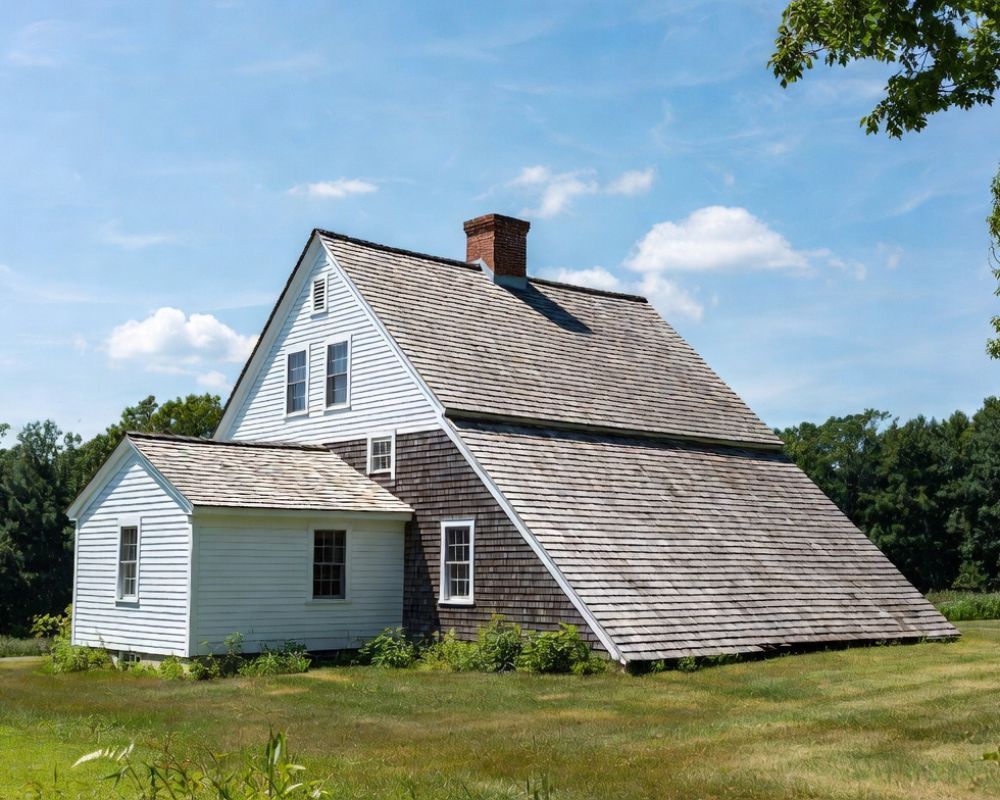
What it is: The Cape Cod roof is perhaps the most quintessentially New England roof style of all. It's essentially a steeply pitched gable roof where the ceiling follows the roofline, often with dormers added to create headroom and light in the upper level. The saltbox is a related style where the rear roofline extends much lower than the front, creating an asymmetrical profile that was common in early Colonial Massachusetts.
Why it's so common in Massachusetts: Cape Cod homes were specifically designed for the New England climate - the steep pitch sheds snow effectively, the compact footprint retains heat, and the low profile reduces wind exposure. You'll find Cape Cods on virtually every street in Milford, Hopkinton, Ashland, Medway, and across MetroWest.
Pros:
- Purpose-built for New England weather
- Steep pitch provides excellent snow shedding
- Low-maintenance exterior
- Historically and aesthetically appropriate for the region
- Energy-efficient when properly insulated
Cons:
- Limited headroom in upper rooms without dormers
- Dormers add complexity and potential leak points
- Cathedral ceiling areas make insulation and ventilation challenging
- The roof-wall junction at the eave is a critical ice dam zone
Key consideration for Cape Cod homeowners: The eave area of a Cape Cod roof is one of the highest-risk zones for ice dam formation in Massachusetts. Master Roof always installs a minimum 6-foot run of GAF WeatherWatch® Ice & Water Shield from the eave edge - and often more on Cape Cods - to protect against water infiltration during freeze-thaw events.
6. Flat Roof (Low-Slope Roof)
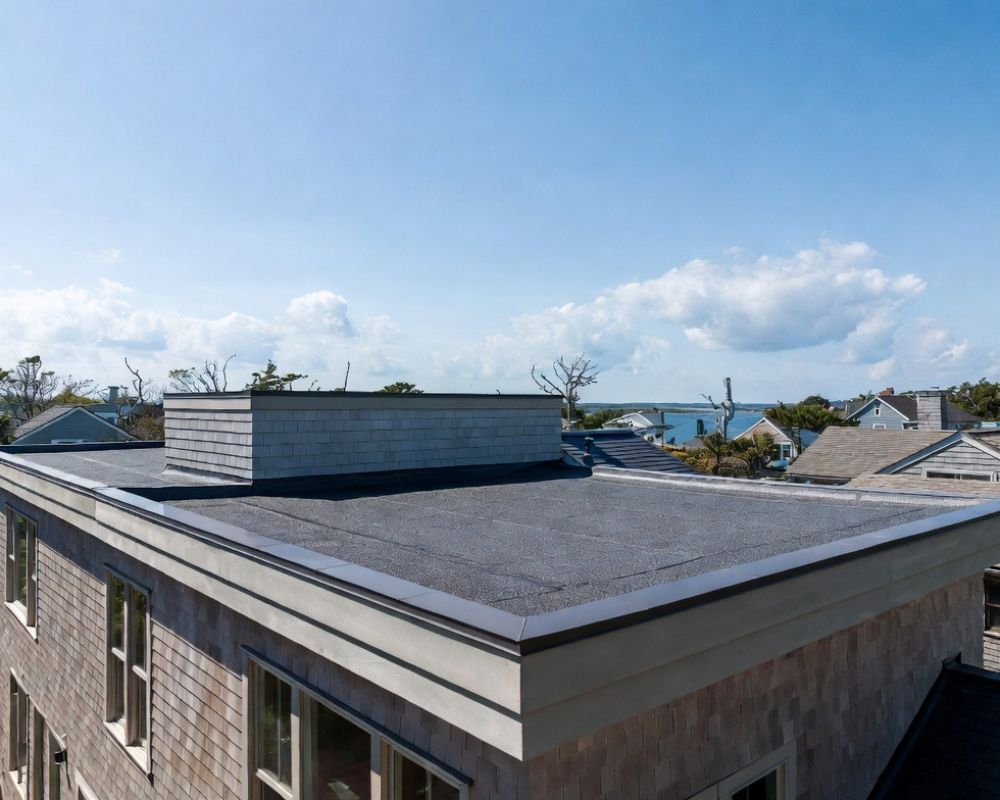
What it is: A flat roof isn't truly flat - it has a slight pitch (typically ¼" to ½" per foot) to allow water drainage. Flat and low-slope roofs are common on commercial buildings, additions, porches, and some contemporary residential designs.
Where you'll find flat roofs in Massachusetts: While uncommon as a primary roof style on traditional New England homes, flat roofs appear frequently on:
- Attached garages and additions
- Porches and sunrooms
- Commercial properties throughout Milford, Marlborough, and the Route 9 corridor
- Contemporary and mid-century modern homes
Common flat roof materials:
- EPDM (rubber membrane) - Durable, cost-effective, widely used
- TPO (thermoplastic polyolefin) - White, reflective, energy-efficient
- Modified Bitumen - Multi-layer system excellent for New England cold
- GAF EverGuard® TPO - Master Roof's preferred flat roof system
Pros:
- Lower initial construction cost
- Accessible for HVAC equipment, solar panels
- Modern, clean aesthetic for contemporary designs
- Easy to inspect and maintain
Cons:
- Snow and ice accumulation is a serious concern in Massachusetts
- Requires more frequent inspection and maintenance
- Ponding water can accelerate membrane deterioration
- Shorter lifespan than steep-slope systems without proper maintenance
Critical note for New England flat roofs: Massachusetts's heavy snowfall can place extreme weight loads on flat roofs. Regular snow removal is essential. Master Roof recommends proper drainage planning and premium membrane systems for any flat or low-slope application in our region.
7. Shed Roof (Single Slope / Skillion Roof)
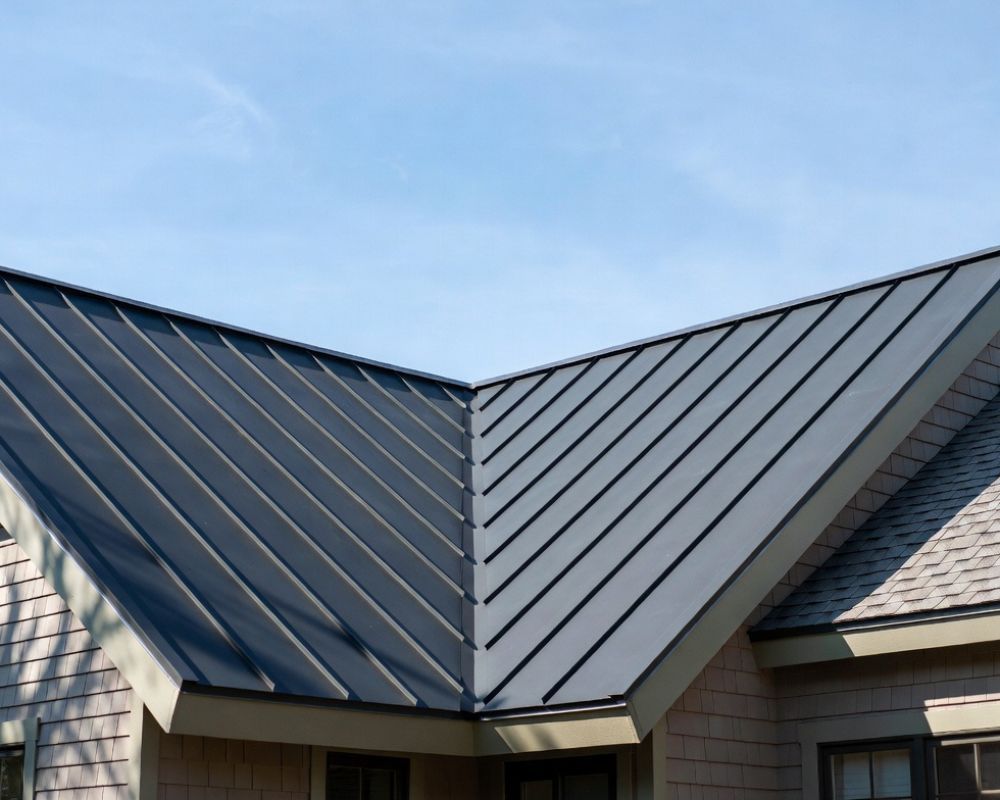
What it is: A shed roof has a single sloping surface - one side is higher than the other, creating a simple angled plane. Once limited to sheds and outbuildings (hence the name), the shed roof has become increasingly popular in modern and contemporary residential architecture.
Where you'll find it in Massachusetts: Shed roofs appear on:
- Modern home additions and extensions throughout MetroWest
- Contemporary new construction in Westborough, Southborough, and Northborough
- Attached garages, mudrooms, and covered porches
- Commercial storefronts throughout the region
Pros:
- Simple, cost-effective construction
- Can be designed at steep enough pitch to shed snow well
- Excellent for solar panel installation (south-facing slope)
- Distinctive modern aesthetic
- Easy to ventilate
Cons:
- Not appropriate for traditional New England architectural styles
- The low eave side can be vulnerable to ice dams
- Limited to smaller spans or contemporary designs
8. Butterfly Roof
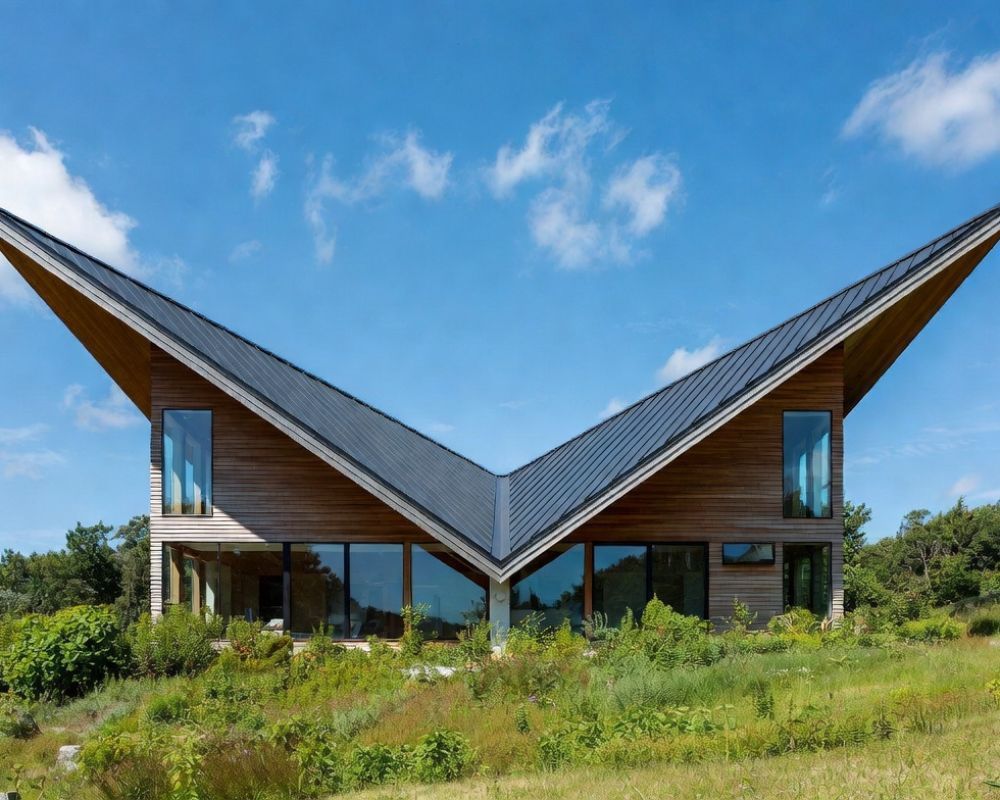
What it is: The butterfly roof is essentially an inverted gable - two roof surfaces slope downward toward a central valley rather than upward to a ridge. From the exterior, the roof resembles the open wings of a butterfly. It's a distinctly modernist design feature.
In the Massachusetts context: Butterfly roofs are rare in traditional New England communities but occasionally appear on contemporary custom homes and commercial buildings. They're more common in coastal areas or on architect-designed modern residences.
Pros:
- Dramatic, striking visual statement
- Large windows possible at the high-wall ends
- Rainwater can be collected at the central valley
- Works well with solar panels on both slopes
Cons:
- Extremely problematic in New England - the central valley collects snow and ice
- High risk of ice dam and water infiltration
- Complex waterproofing requirements
- Not recommended for Massachusetts climate without exceptional engineering
Master Roof's honest advice: While striking in appearance, butterfly roofs present serious performance challenges in Massachusetts winters. If you're drawn to this style, we strongly recommend consulting with Master Roof and a structural engineer before proceeding - the waterproofing and snow load management requirements are substantial.
9. Combination Roof
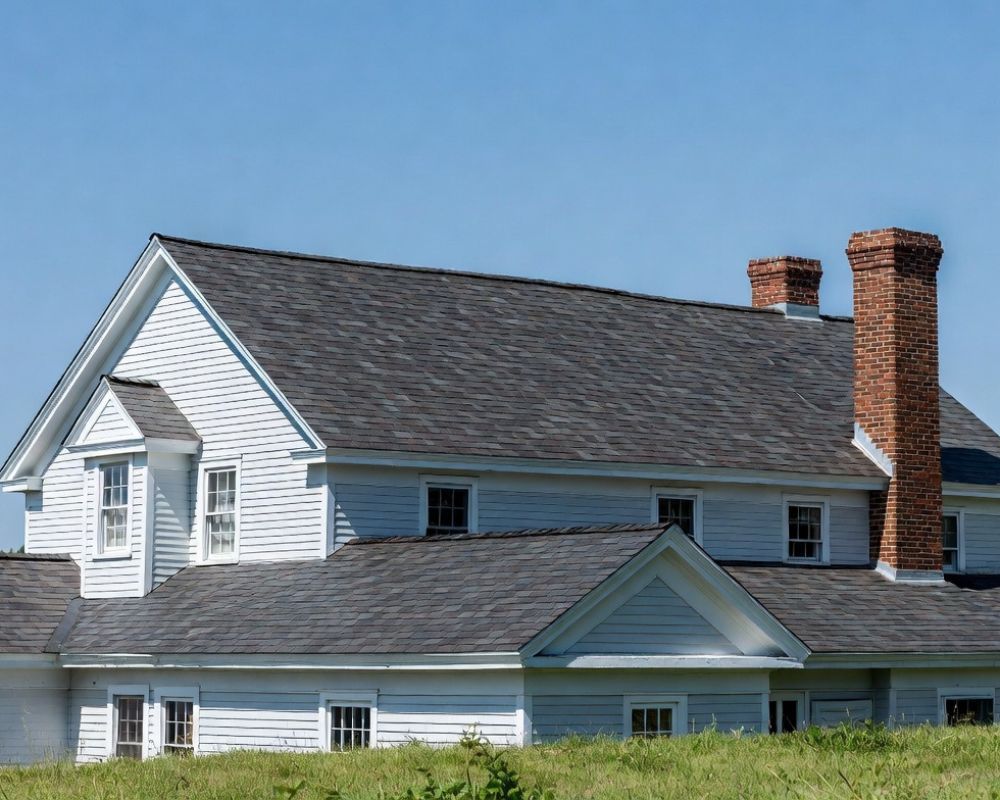
What it is: Most real-world homes - especially those that have been expanded or customized over the years - feature combination roofs that incorporate multiple roof styles. A Colonial with an addition might have a gable main roof with a hip-roofed addition. A Cape Cod might have a saltbox extension and a shed-roofed sunporch.
Why combination roofs are so common in New England: Massachusetts has centuries of architectural history. Many homes have been expanded, renovated, and adapted across multiple generations. The result is often a beautifully complex roofline that combines two or more styles - and presents a unique set of challenges for roofing contractors.
Key challenges of combination roofs:
- Multiple valleys - where two roof planes meet; critical leak zones
- Step and counter flashing - complex flashing details at walls, chimneys, and dormers
- Varied pitches - different sections may require different materials or installation techniques
- Ventilation complexity - maintaining proper airflow across multiple connected roof sections
Why experience matters: Combination roofs demand a highly experienced roofing crew who understands how to properly flash, seal, and ventilate every intersection. Master Roof's
GAF-certified installers have the training and field experience to handle the most complex combination rooflines throughout MetroWest and Central Massachusetts.
What About Roofing Materials?
Your roof style determines the shape and structure of your roof. Your roofing material determines how it performs, how long it lasts, and how it looks. For New England homes, Master Roof recommends:
For Steep-Slope Roofs (Most Massachusetts Homes):
GAF Timberline HDZ® Architectural Shingles - Our top recommendation for the vast majority of New England homes. These Class 4 impact-resistant, wind-resistant shingles are specifically engineered for demanding climates and come with a Limited Lifetime warranty when installed by a GAF Master Elite® contractor like Master Roof.
- Superior algae resistance (critical in humid Massachusetts summers)
- StainGuard Plus™ protection
- WindProven™ limited wind warranty - no wind speed limit
- Available in dozens of colors to complement any New England home exterior
For Low-Slope Roofs and Flat Sections:
GAF EverGuard® TPO — White, reflective, energy-efficient membrane system ideal for additions, porches, and commercial applications in Massachusetts.
For Premium Projects:
GAF Camelot® II or Grand Sequoia® Shingles - For homeowners who want the look of cedar shake or slate with the performance and warranty of modern GAF technology.
The Role of Ventilation and Insulation - No Matter What Roof Style You Have
Regardless of your roof style, proper attic ventilation and insulation are non-negotiable for New England homes. Here's why:
Ventilation
- Keeps the roof deck cold and uniform in winter, preventing ice dam formation
- Exhausts summer heat, reducing attic temperatures and cooling costs
- Removes moisture that leads to mold, rot, and structural damage
- Required by Massachusetts building code and GAF warranty terms
Insulation
- Prevents warm interior air from reaching the cold roof deck
- Reduces energy consumption year-round
- Works with ventilation to protect against ice dams
- Can qualify for Massachusetts energy efficiency rebates
Master Roof evaluates ventilation and insulation on every roofing project - because even the best shingles won't perform to their potential without the right thermal and moisture management system beneath them.
How Master Roof Approaches Every Roofing Project
No matter what roof style your Massachusetts home has, every Master Roof project follows the same standards of excellence:
1. Free Comprehensive Roof Assessment
We start with a thorough inspection of your existing roof, attic, ventilation, and insulation. We document everything with photos and give you an honest evaluation of what's needed.
2. Clear, Detailed Written Proposal
You'll receive a complete written proposal specifying every material, every step of the process, warranty coverage, timeline, and payment terms. No surprises.
3. Professional Installation by GAF-Certified Crews
Our installation crews are GAF-trained and follow GAF System installation protocols - ensuring your warranty is valid and your roof performs as designed.
4. Best-in-Class Warranty Coverage
As a GAF Master Elite® Certified Contractor - a distinction earned by fewer than 3% of roofers nationwide - Master Roof can offer the GAF Golden Pledge® warranty, covering both materials and installation labor. This is the best roofing warranty available in the industry.
5. Complete Cleanup and Final Walkthrough
We use magnetic rollers to collect nails, remove all old materials and debris, and do a final inspection walkthrough with you before we consider the job complete.
FAQ: Understanding Different Roof Styles for Your New England Home
What is the most common roof style in Massachusetts?
The gable roof is the most common roof style found on Massachusetts homes. Its steeply pitched, triangular design is perfectly suited for New England's climate - shedding snow efficiently, resisting ice dam formation, and providing excellent attic ventilation. You'll find gable roofs on Colonial, Cape Cod, and Ranch-style homes throughout MetroWest and Central Massachusetts communities like Milford, Hopkinton, Northborough, and Grafton.
What is the best roof style for heavy snow and ice in New England?
For Massachusetts's harsh winters, gable and Cape Cod roofs with steep pitches perform best. The steeper the slope, the more efficiently snow slides off the roof, reducing the risk of ice dams and structural overload. Hip roofs are also excellent performers, offering additional wind resistance alongside good snow-shedding capability. Master Roof recommends avoiding low-slope or butterfly roof designs as primary roof styles in Massachusetts - they are prone to dangerous snow and ice accumulation.
Which roof style is most wind-resistant in Massachusetts?
The hip roof is the most wind-resistant roof style available. Because all four sides slope downward with no flat vertical gable ends, there is significantly less surface area for wind to catch and lift. This makes hip roofs an excellent choice for Massachusetts homes in more exposed locations. Nor'easters and severe coastal storms are a regular reality in our region - a hip roof's aerodynamic geometry handles these events better than any other style.
What is the difference between a gable roof and a hip roof?
The key difference is in the end walls:
- A gable roof has two sloping sides that meet at a central ridge, with triangular vertical walls (gables) at each end.
- A hip roof has four sloping sides with no vertical gable ends - all sides slope downward to the eave line.
Hip roofs are more wind-resistant and have a more finished appearance from all angles, but they cost more to build and repair. Gable roofs are simpler, less expensive, and easier to ventilate, but gable ends can be vulnerable to wind uplift in severe storms.
What is a gambrel roof and where does it appear in Massachusetts?
A gambrel roof features two distinct slopes on each of its two sides - a shallower upper slope and a much steeper lower slope. It's the classic "barn roof" shape and has deep roots in New England architecture. In Massachusetts, gambrel roofs are most commonly found on Dutch Colonial-style homes throughout communities like Hopkinton, Grafton, Upton, and Northborough. The style's greatest advantage is that the steep lower slope creates significantly more usable upper-floor living space than a standard gable roof.
Are gambrel roofs good for New England winters?
Gambrel roofs have mixed performance in New England winters. The steep lower slope sheds snow very effectively. However, the shallower upper slope is prone to snow accumulation and ice dam formation. The transition point between the two slopes - known as the eave break - is also a common area for leaks and rot if not properly protected. Master Roof addresses this by installing GAF WeatherWatch® Ice & Water Shield at all vulnerable transition points on gambrel roofs throughout Massachusetts.
What is a mansard roof and why is it common on older Massachusetts homes?
A mansard roof is a four-sided roof style with two distinct slopes on all four sides - a very steep lower slope and a nearly flat upper section, often featuring dormer windows. It's associated with Victorian and Second Empire architecture, which was widely popular in Massachusetts during the late 1800s. You'll find mansard roofs on historic homes in the town centers of communities like Milford, Medfield, Millis, and Bellingham. While architecturally beautiful, mansard roofs are among the most complex and maintenance-intensive roof styles to work on.
What is a Cape Cod roof and how does it perform in Massachusetts winters?
The Cape Cod roof is essentially a steeply pitched gable roof where the living space extends up into the roofline, often with dormers for light and headroom. It is one of the most historically appropriate and weather-suited roof styles for Massachusetts - developed specifically for the New England climate. The steep pitch sheds snow efficiently, the compact design retains heat, and the low profile reduces wind exposure. However, the eave area of a Cape Cod is a high-risk zone for ice dams, which is why Master Roof always installs a minimum of 6 feet of GAF WeatherWatch® Ice & Water Shield at the eave edge on every Cape Cod roof replacement.
What is a saltbox roof?
A saltbox roof is a variation of the Cape Cod gable roof where the rear roofline extends much lower than the front, creating a distinctly asymmetrical profile. The name comes from the resemblance to old wooden salt storage boxes. Saltbox roofs are a historically significant style in early Colonial Massachusetts architecture. From a performance standpoint, the long rear slope is excellent at shedding snow, though the lower eave on the rear elevation requires careful attention to ice and water protection.
Are flat roofs a good choice for Massachusetts homes?
Flat roofs are generally not recommended as a primary roof style for Massachusetts homes due to the region's heavy snowfall and freeze-thaw cycles. Snow and ice accumulate on flat roofs rather than sliding off, creating significant weight loads and water infiltration risks. However, flat and low-slope roofs are common and perfectly appropriate for additions, porches, garages, and commercial buildings when properly designed with the right membrane system. Master Roof installs GAF EverGuard® TPO membrane for low-slope applications throughout Massachusetts.
What is the difference between a flat roof and a low-slope roof?
Both terms are often used interchangeably, but there is a technical distinction:
- A flat roof appears level but has a minimum slope of ¼" per foot for drainage.
- A low-slope roof has a pitch between ¼:12 and 3:12.
- A steep-slope roof has a pitch of 3:12 or greater.
Both flat and low-slope roofs require membrane roofing systems rather than traditional shingles. In Massachusetts, both require careful attention to drainage design and snow load management.
What is a shed roof and when is it a good choice in Massachusetts?
A shed roof (also called a skillion roof) features a single sloping surface angled in one direction. It's a simple, cost-effective design that has become popular in modern and contemporary architecture. In Massachusetts, shed roofs are commonly used for home additions, mudrooms, covered porches, and garages throughout MetroWest communities. When pitched steeply enough, they shed snow well and are ideal for south-facing solar panel installations. They are not well-suited for traditional New England architectural styles.
Why are butterfly roofs not recommended for Massachusetts?
Butterfly roofs are one of the worst roof designs for Massachusetts's climate. The butterfly roof is essentially an inverted gable - two roof planes slope downward toward a central valley rather than upward to a ridge. This means snow, ice, and water all collect at the center of the roof rather than draining away from it. In a New England winter, this creates extreme snow loads, severe ice dam risk, and a very high likelihood of water infiltration. Master Roof strongly advises against butterfly roofs as a primary design in Massachusetts without exceptional structural engineering and waterproofing systems.
What is a combination roof and why are they so common in Massachusetts?
A combination roof incorporates two or more different roof styles on the same structure. They are extremely common in Massachusetts because our housing stock spans centuries - many homes have been expanded, renovated, and added onto across multiple generations, resulting in complex rooflines that blend gable, hip, shed, and other roof styles. Combination roofs are beautiful and practical but present unique challenges including multiple valleys, complex flashing intersections, and varied ventilation needs. They require an experienced, detail-oriented roofing contractor - exactly what Master Roof's GAF-certified crews provide.
What are roof valleys and why do they matter?
Roof valleys are the V-shaped channels formed where two sloping roof planes meet. They are among the most critical - and most vulnerable - areas of any roof. All water, snow, and ice from both adjoining slopes drains through the valley. If valleys are improperly flashed or sealed, they are a primary source of leaks. In Massachusetts, valleys are especially vulnerable to ice dam formation in winter. Master Roof installs GAF WeatherWatch® Ice & Water Shield in all valleys as a standard practice on every roofing project.
What causes ice dams and which roof styles are most vulnerable?
Ice dams form when warm air escaping from a poorly insulated or ventilated attic melts snow on the roof deck. The meltwater runs down to the cold eave edge and refreezes, forming a dam that forces water back up under the shingles and into the home. The roof styles most vulnerable to ice dams in Massachusetts include:
- Flat and low-slope roofs - water cannot drain away quickly
- Gambrel roofs - the shallow upper slope retains snow
- Butterfly roofs - the central valley collects everything
- Cape Cod roofs - the eave area is especially cold and prone to refreezing
The best defense against ice dams is a combination of proper attic insulation, adequate ventilation, and GAF WeatherWatch® Ice & Water Shield installed at eaves, valleys, and penetrations - all of which Master Roof addresses on every project.
How does roof pitch affect performance in New England?
Roof pitch (the slope of the roof, expressed as inches of rise per 12 inches of horizontal run) has a direct impact on how your roof performs in Massachusetts:
- Steep pitch (6:12 and above) - Excellent snow shedding, lower ice dam risk, more attic space, works with all shingle types
- Moderate pitch (4:12 to 6:12) - Good performance with proper underlayment and ventilation
- Low pitch (2:12 to 4:12) - Requires special installation techniques and enhanced underlayment
- Flat/low-slope (under 2:12) - Requires membrane roofing; significant snow management needed
Master Roof evaluates your roof's specific pitch during every free assessment and recommends the appropriate materials and installation approach accordingly.
What roofing materials work best for New England roof styles?
For the steep-slope roofs most common in Massachusetts, GAF Timberline HDZ® architectural shingles are Master Roof's top recommendation. They offer:
- Wind resistance up to 130 mph (WindProven™ - no wind speed limit with full GAF system)
- Algae and stain resistance with StainGuard Plus™
- Limited Lifetime warranty when installed by a GAF Master Elite® contractor
- Excellent performance in freeze-thaw conditions
For flat and low-slope applications, GAF EverGuard® TPO membrane is our preferred system. For premium projects where homeowners want the look of slate or cedar shake, GAF Camelot® II or Grand Sequoia® shingles are outstanding choices.
Does my roof style affect my GAF warranty coverage?
Your roof style itself does not affect GAF warranty eligibility, but the installation method and material specifications do. GAF's best warranties - including the Golden Pledge® warranty covering both materials and labor - require that the full GAF Roofing System be installed, including qualifying underlayment, ventilation products, and accessories. They also require installation by a GAF Master Elite® Certified Contractor. Master Roof holds this certification and can offer the Golden Pledge® warranty on qualifying projects regardless of roof style, as long as the appropriate GAF system components are used.
How do I know which roof style my Massachusetts home has?
Here's a quick guide:
- Two sloping sides meeting at a ridge, triangular ends → Gable Roof
- Four sloping sides, no flat end walls → Hip Roof
- Two slopes on each of two sides (shallow top, steep bottom) → Gambrel Roof
- Four sides with steep lower slope, nearly flat upper section, dormers → Mansard Roof
- Steeply pitched with living space inside the roofline → Cape Cod
- Asymmetrical with one long low rear slope → Saltbox
- One single sloping plane → Shed Roof
- Slopes downward to a central valley → Butterfly Roof
- Combination of two or more above → Combination Roof
Not sure? Master Roof offers free roof assessments throughout Massachusetts - we'll identify your roof style, assess its current condition, and give you honest recommendations.
How much does it cost to replace different roof styles in Massachusetts?
Roof replacement costs in Massachusetts vary significantly by roof style due to differences in complexity, labor, and material requirements. Most Massachusetts homeowners pay between $9,000 and $20,000+ for a full roof replacement. Master Roof provides free, detailed written estimates with no hidden fees for all roof styles throughout MetroWest and Central Massachusetts.
Does Master Roof work on all roof styles in Massachusetts?
Yes - Master Roof has experience with every roof style found on New England homes. From simple gable roofs on Ranch homes in Hudson to complex combination roofs on historic Colonials in Hopkinton to Victorian mansard roofs in Milford, our GAF-certified crews have the training, tools, and experience to handle any roof style correctly. We serve homeowners throughout MetroWest and Central Massachusetts including Milford, Hopkinton, Northborough, Southborough, Westborough, Grafton, Upton, Mendon, Medway, Franklin, Holliston, Ashland, Shrewsbury, Marlborough, Hudson, and dozens more communities. Visit www.masterroof.com to schedule your free roof assessment.
Ready to Talk About Your Roof?
Whether you're facing an emergency repair, planning a complete replacement, or simply want a professional opinion on the condition of your current roof, Master Roof is ready to help.
Contact Master Roof Today:
- Serving MetroWest & Central Massachusetts
- GAF Master Elite® Certified Contractor
- Massachusetts Licensed & Fully Insured
- Free Roof Assessments - No Obligation