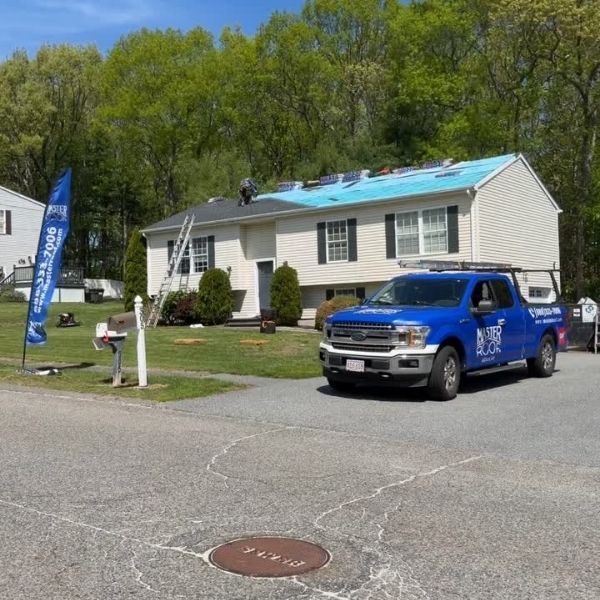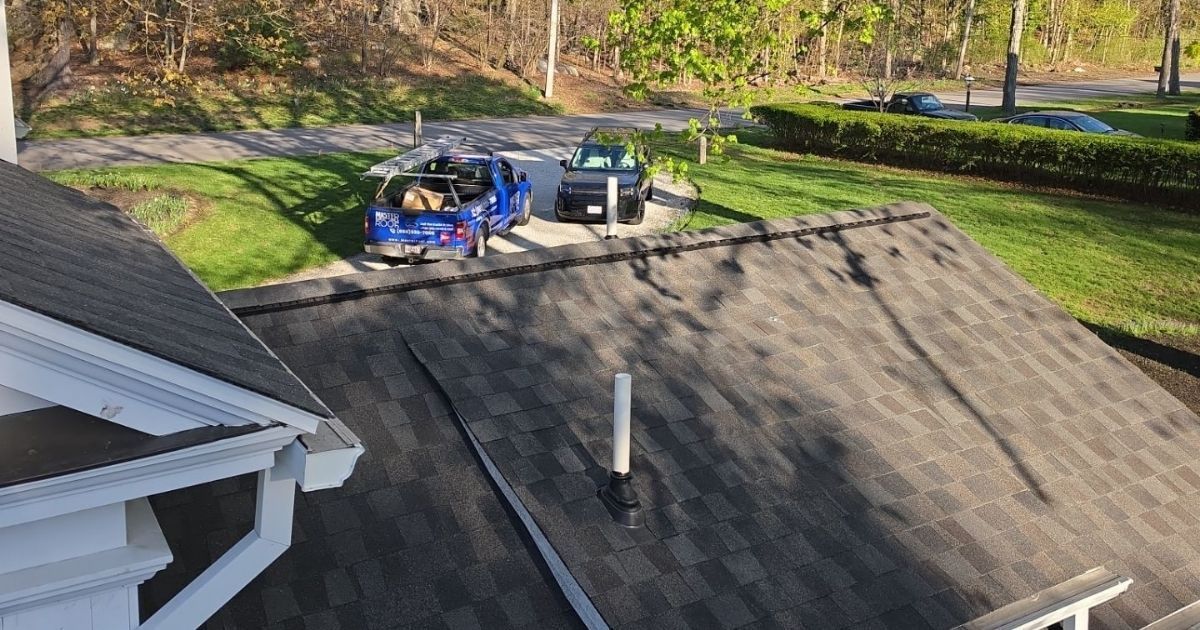
Roof Replacement in Blackstone, MA: Leaking Skylights, Competing Vents, and a Ridge That Was Never Opened
Project Snapshot
- Location: Blackstone, MA
- Year Built: 1986
- Service: Full roof replacement, skylight replacement, ventilation correction
- Inspection: June 2026
- Installation: August 2026
- Key Issues: Leaking skylights, mixed ventilation systems, unvented ridge, attic condensation, worn shingles
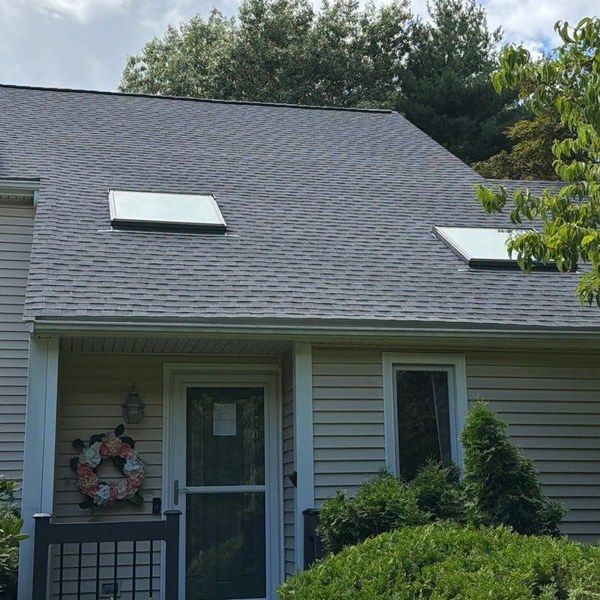
- Materials: GAF architectural shingles, leak barrier, synthetic underlayment, continuous ridge vent, heavy-duty pipe boots, new skylights
Materials List
- Roof Size: 24 SQ
- Shingles: GAF Timberline HDZ
- Shingle Color: Pewter Gray
- Ridge Cap: GAF Timbertex
- Leak Barrier: GAF Storm Guard
- Underlayment: GAF Deck Armor
Key Takeaways
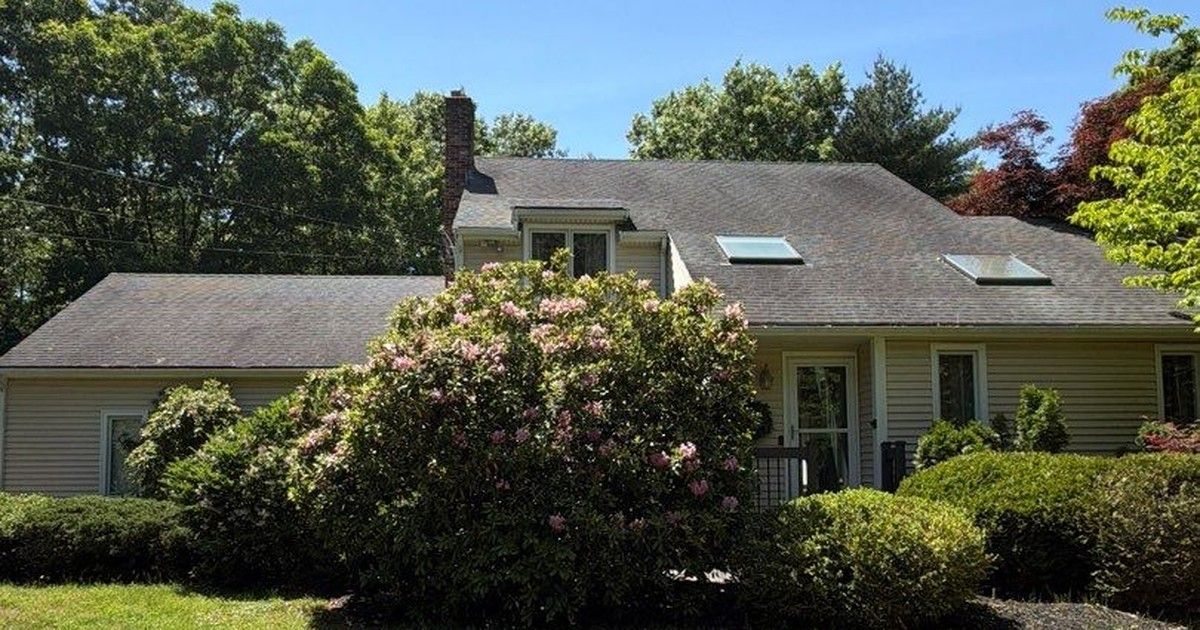
- A 1986 Blackstone, MA home on its original roof — forty years of service, and three separate problems feeding the same interior leaks.
- Skylights were leaking at their factory seals — replaced rather than re-flashed, because re-flashing breaks seals that cannot be restored.
- The attic ridge had been cut open for a ridge vent that was never installed.
- Four different ventilation systems were competing with each other, short-circuiting airflow instead of adding to it.
- Condensation staining on the decking confirmed the attic was not breathing — but the plywood itself was still sound and was reused.
- Result: one balanced ventilation system, new skylights, rebuilt chimney flashing, and a full GAF roof.
Overview
In June 2026, a homeowner contacted Master Roof about water appearing inside their house and asked us to price a roof replacement in Blackstone, MA. The home was built in 1986, which meant the roof had been working for roughly forty years — well past the point where an asphalt roof owes you anything. Our inspector spent the afternoon on the roof and in the attic and came away with nearly forty photos, because this roof had more than one thing going wrong at once.
The shingles were finished. But the leaks were not coming from the shingles alone — they were coming from aging skylights, and the attic underneath was quietly telling a second story about ventilation. Both had to be solved together, or the new roof would inherit the same problems.
What the Inspection Found
Shingles at the end of their service life
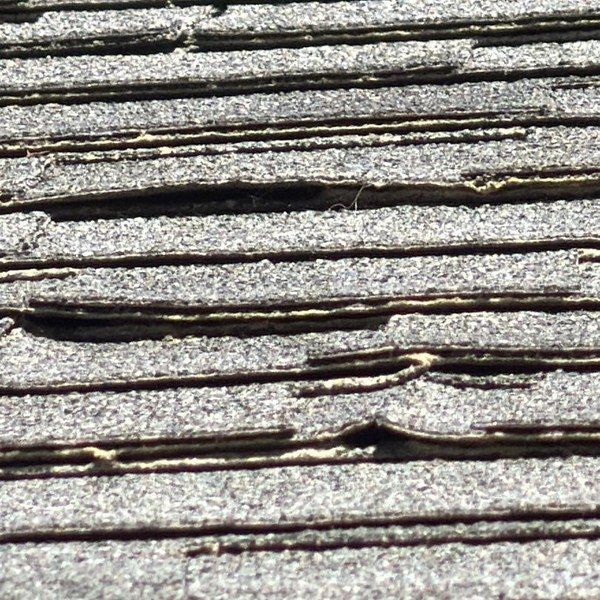
Across every elevation, the shingles were dry and brittle. Granules were washing off, edges were curling, and whole courses were lifting where the factory adhesive strip had given up. Once that seal releases, wind gets underneath the shingle and the roof stops working as a system. Roofs of this vintage were commonly built with three-tab shingles, which have a shorter service life than the architectural shingles used today.
Skylights that were leaking, not just old
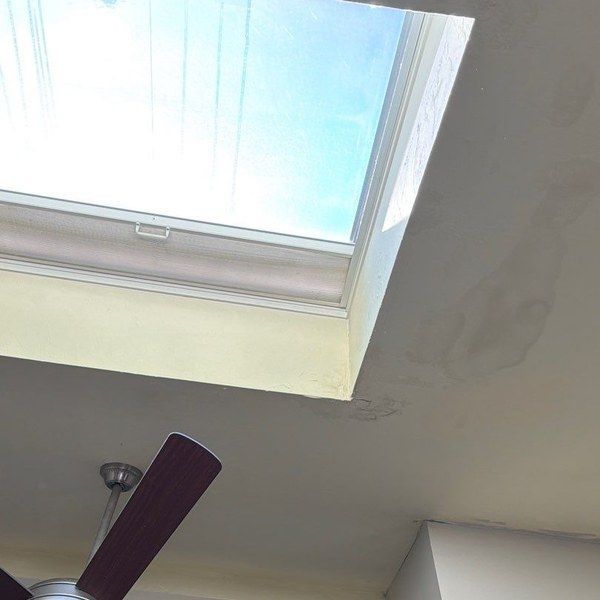
Two skylights showed staining on the surrounding ceiling and drywall — the clearest confirmation of an active leak we found. Skylights have roughly the same service life as the roof around them, which is why we recommend skylight replacement at the same time as the roof. Re-flashing an old skylight means breaking factory seals that were never designed to be opened and closed again, and those seals are the part doing the waterproofing.
We took the same approach on a 1950 home in Uxbridge, where skylight replacement was folded into the roof project rather than deferred.
A ridge that was cut open but never vented
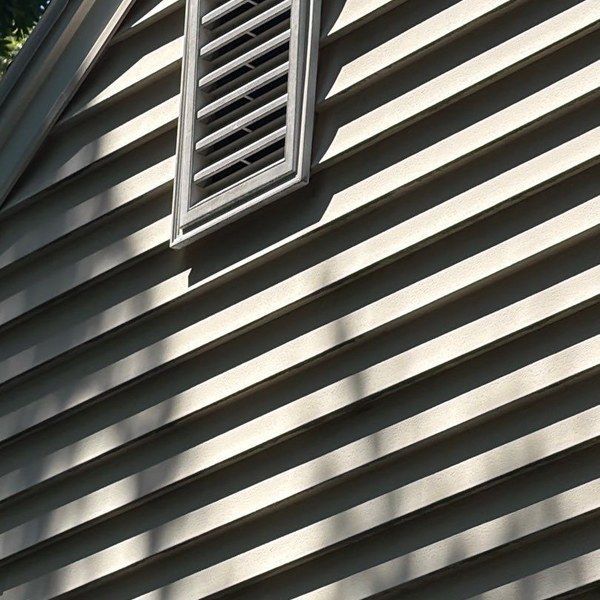
In the attic we found the ridge board opening cut, as though a ridge vent had been planned — but no ridge vent was ever installed above it. Instead, the house had picked up a collection of different ventilation systems across four decades: gable vents at both ends, soffit vents along the eaves, and a power vent over the garage.
That combination sounds like more airflow. It is actually less. When systems are mixed, air short-circuits — the exhaust pulls from the nearest opening instead of drawing across the whole attic, and large sections get no air movement at all. The fix for attic ventilation problems is to commit to one balanced system, not to add another vent.
Moisture the attic had already recorded
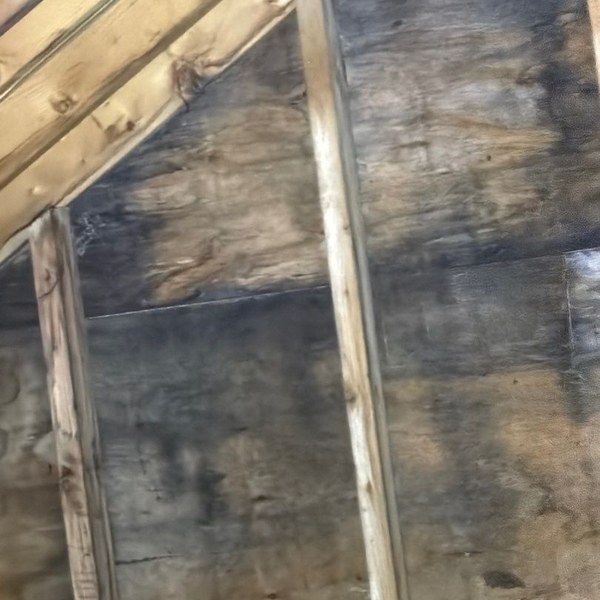
Sections of the roof decking showed dark staining — the signature of condensation forming against a cold deck in an under-ventilated attic. Left alone, that pattern leads to mold and eventually to soft decking. Insulation was also thin in several bays, which makes the condensation problem worse. We found a similar pattern on a proactive replacement in Milford, where hidden attic moisture was the real story.
The good news: the 1986 plywood decking was still dry and structurally sound in most areas, which meant the deck could be reused rather than replaced.
The Ventilation Standard We Design To
Attic ventilation follows the 1/300 rule: for every 300 square feet of attic floor, the roof needs at least 1 square foot of net free ventilation, split evenly between intake at the eaves and exhaust at the ridge. Exhaust should never exceed intake — an exhaust-heavy attic pulls conditioned air up out of the living space instead of pulling outside air through the attic.
Roughly 80% of older homes we inspect have a ventilation problem of some kind. It is the single most common thing a new roof gets installed over without being corrected. A Mendon project and a 1968 Holliston home both turned on the same issue.
The Work Performed
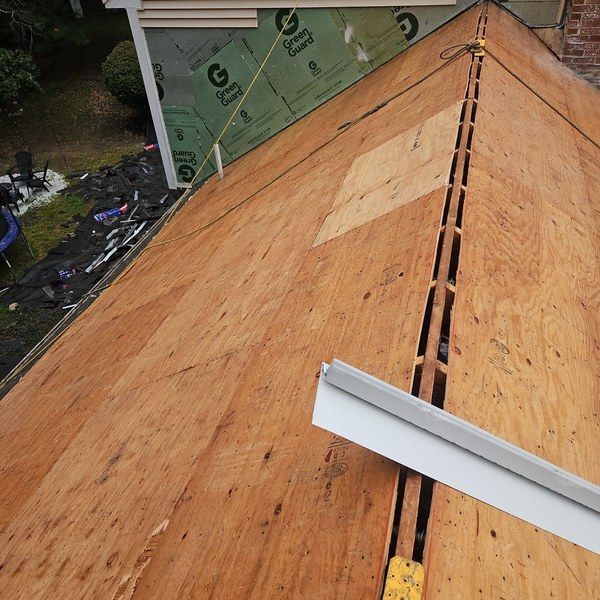
- Full tear-off of the existing shingles down to the deck, with the plywood inspected and confirmed sound before anything went back on.
- The ridge properly opened and a continuous ridge vent installed, paired with the existing soffit intake to create one balanced system.
- Both aging skylights replaced rather than re-flashed, preserving factory seals on new units.
- New leak barrier at the eaves, valleys, and all penetrations, followed by synthetic underlayment across the full deck.
- Pipe boots replaced with heavy-duty boots rated to last the life of the roof, rather than standard rubber boots that fail early.
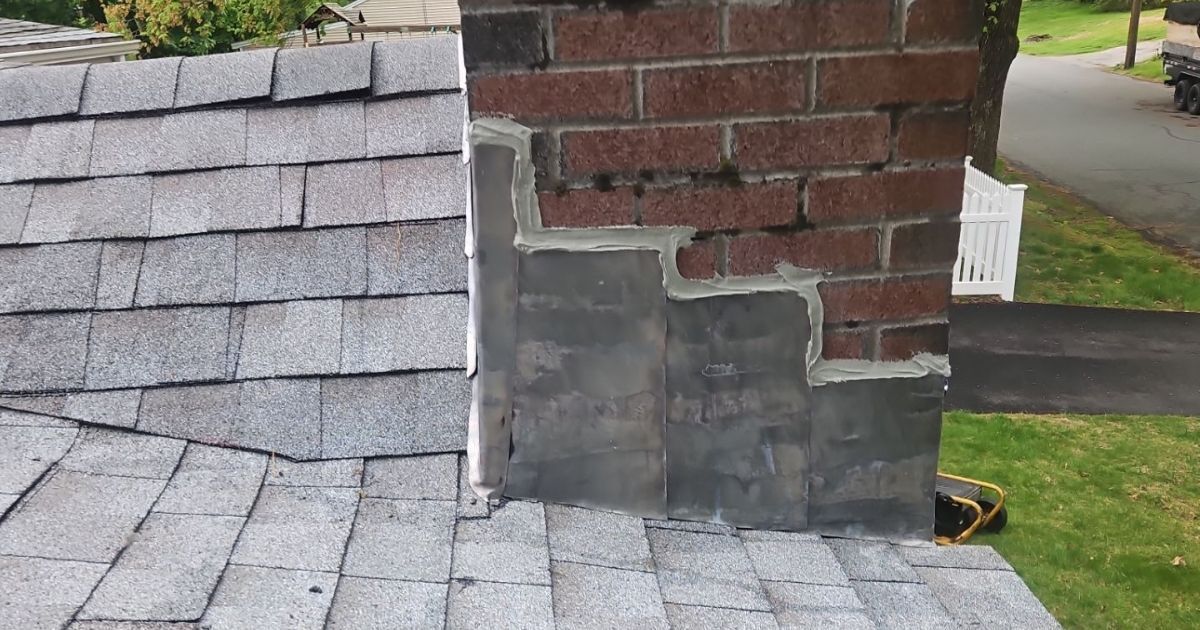
- Chimney flashing rebuilt in three layers: ice and water membrane carried six inches up the brick, aluminum step flashing woven into every shingle course with lead at the corners, and new counter-flashing over the top.
- Gutters cleared and checked — the leaf guards were clogged in several runs, which pushes water behind the gutter and rots the fascia.
- GAF architectural shingles installed across the entire roof.
The Result
The home now has a complete roofing system rather than a collection of parts. New skylights sit in new flashing, the ridge finally exhausts the air the soffits bring in, and the chimney has three independent layers of protection where it meets the roof plane.
Just as importantly, the attic conditions that were staining the decking have been addressed. A roof that breathes properly stays dry underneath, and a dry deck is what makes a shingle warranty mean something.
Frequently Asked Questions
Should skylights be replaced when the roof is replaced?
In almost every case, yes — if the skylights are the same age as the roof. Skylights and asphalt shingles have similar service lives, so an old skylight under a new roof becomes the weak point within a few years. Re-flashing and reusing an old unit also requires breaking factory seals that were not designed to be reopened, and those seals are what keep water out. Replacing both together costs less than doing the skylight again later, because the surrounding roof is already open. See our skylight installation and repair page for details.
Can I fix attic ventilation problems by adding more vents?
Usually not. Adding a vent to an attic that already has several types of ventilation often makes airflow worse, not better. When gable vents, soffit vents, ridge vents, and power vents are all present, they short-circuit each other — the exhaust pulls air from the nearest opening instead of drawing it across the entire attic, leaving large areas with no movement at all. The correct fix is to choose one balanced system and close the others. Our guide to why roof ventilation matters walks through the 1/300 rule.
What does a ridge vent do, and how do I know if I have one?
A ridge vent runs along the peak of the roof and lets hot, moist air escape, while soffit vents at the eaves let cooler outside air in. Together they move air continuously through the attic. From the ground, a ridge vent looks like a low, slightly raised cap running the length of the peak. The only way to confirm it is working is from inside the attic — as this Blackstone project showed, a ridge can be cut open without a vent ever being installed over it.
Do dark stains on attic roof decking mean I have mold?
Not necessarily, but they mean moisture is condensing where it should not be. Dark or black patches on the underside of the decking are typically caused by warm, humid air from the house meeting a cold roof deck in an attic that is not venting properly. Left uncorrected, that condition can grow mold and eventually soften the decking. Caught early, correcting the ventilation usually stops the process, and the existing decking can often be reused. A free roof assessment includes an attic inspection.
How long should a roof last on a 1980s home in Massachusetts?
Most asphalt roofs from that era were built with three-tab shingles rated for roughly 20 to 25 years. Many last longer in practice, and this 1986 Blackstone home got about forty - but the last decade of that life is usually spent leaking somewhere. If your home dates from the 1980s and has never been re-roofed, you are past due for an inspection even if nothing is dripping yet.
Call (508) 859-9657 or request a free estimate.
Project Gallery
Other Roofing Projects in Blackstone & Surrounding Towns
At Master Roof, we offer exceptional residential roofing services across Blackstone including roof replacement, repairs, attic ventilation, chimney flashing, skylight installations, roof maintenance, and assessments. Here are some other Master Roof projects in the area.