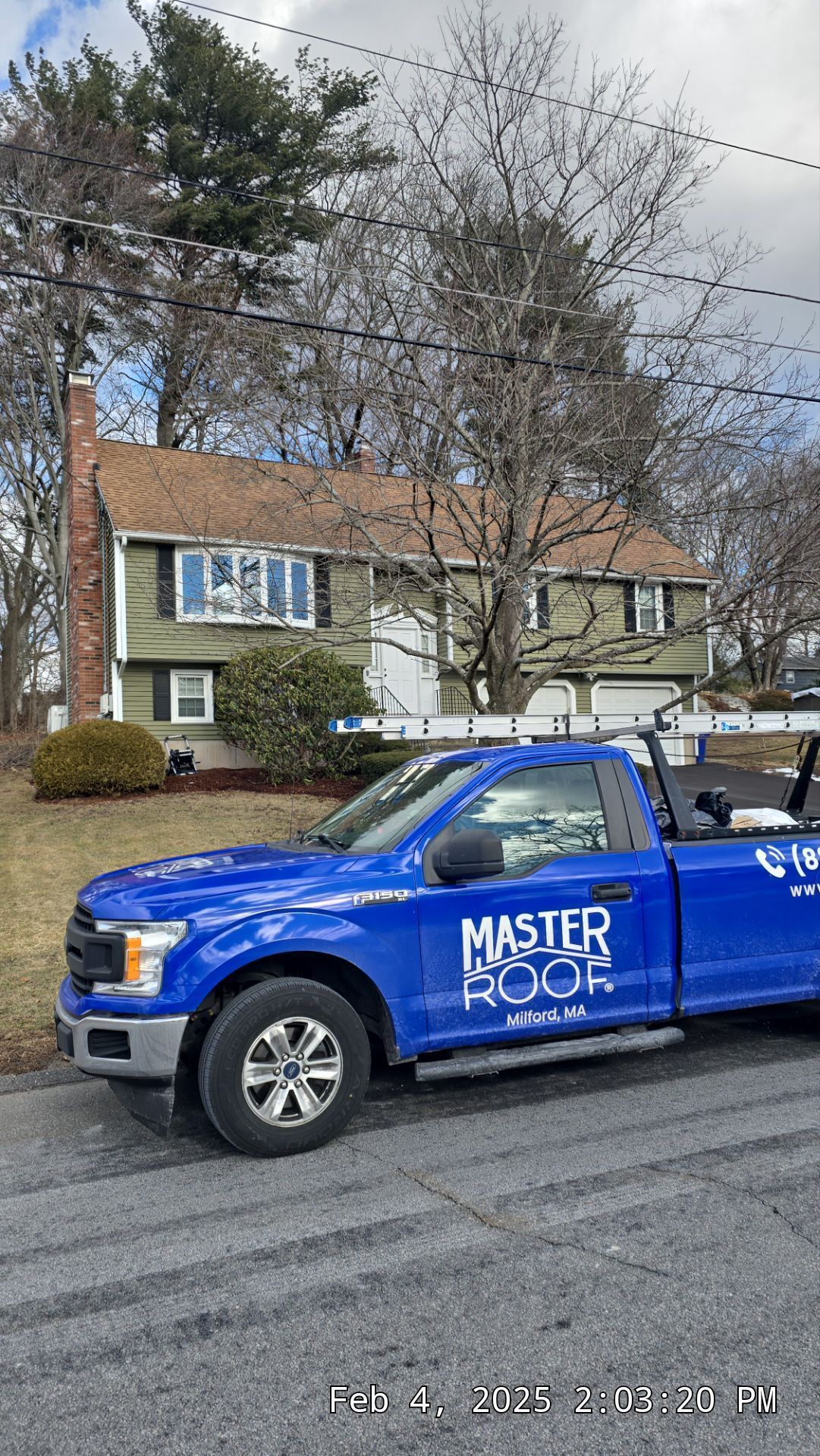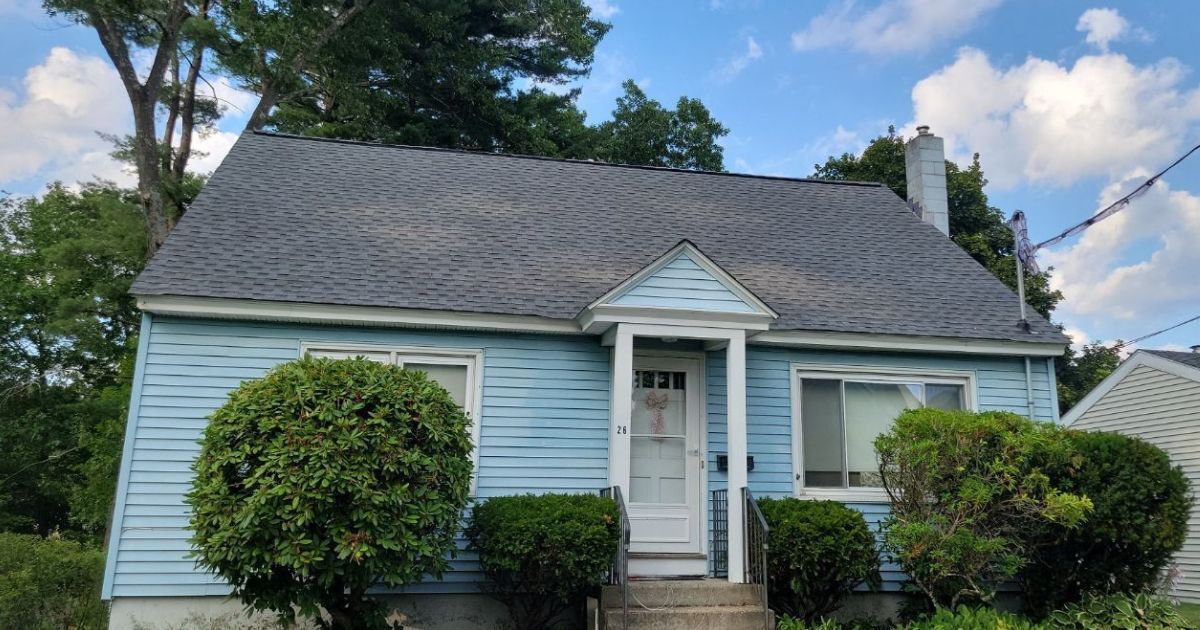
Bellingham Roof Replacement: A 1962 Ranch with Water-Damaged Decking & Blocked Attic Intake
At A Glance
- Location & building: A 1962 single-story ranch in Bellingham, MA, still on its original roof deck
- Problem: Water-damaged and sagging plywood decking, attic insulation packed tight to the eaves so no air could enter from the soffits, a first-generation ridge cap vent that restricted exhaust, a cracked rubber pipe boot seal, daylight visible around a roof vent, deteriorated chimney flashing, and moss and algae with loose and missing shingles
- Solution: Full tear-off down to the rafters, complete replacement of the roof decking with new CDX plywood, rafter vent baffles installed in every bay to reopen soffit intake, and a new GAF roof system with new flashing, a new pipe boot, and a new ridge vent
- Result: A structurally sound deck and a balanced intake-and-exhaust ventilation system — the two things an older roof needs before new shingles are worth putting on it
- Before/after highlight: Attic insulation smothering the soffit intake → open, baffled air channels in every rafter bay
Materials Used
- Roof Size: 19 SQ
- Shingles: GAF Timberline HDZ
- Shingle Color: Pewter Gray
- Ridge Cap: GAF Timbertex
- Leak Barrier: GAF Storm Guard
- Underlayment: GAF Deck Armor
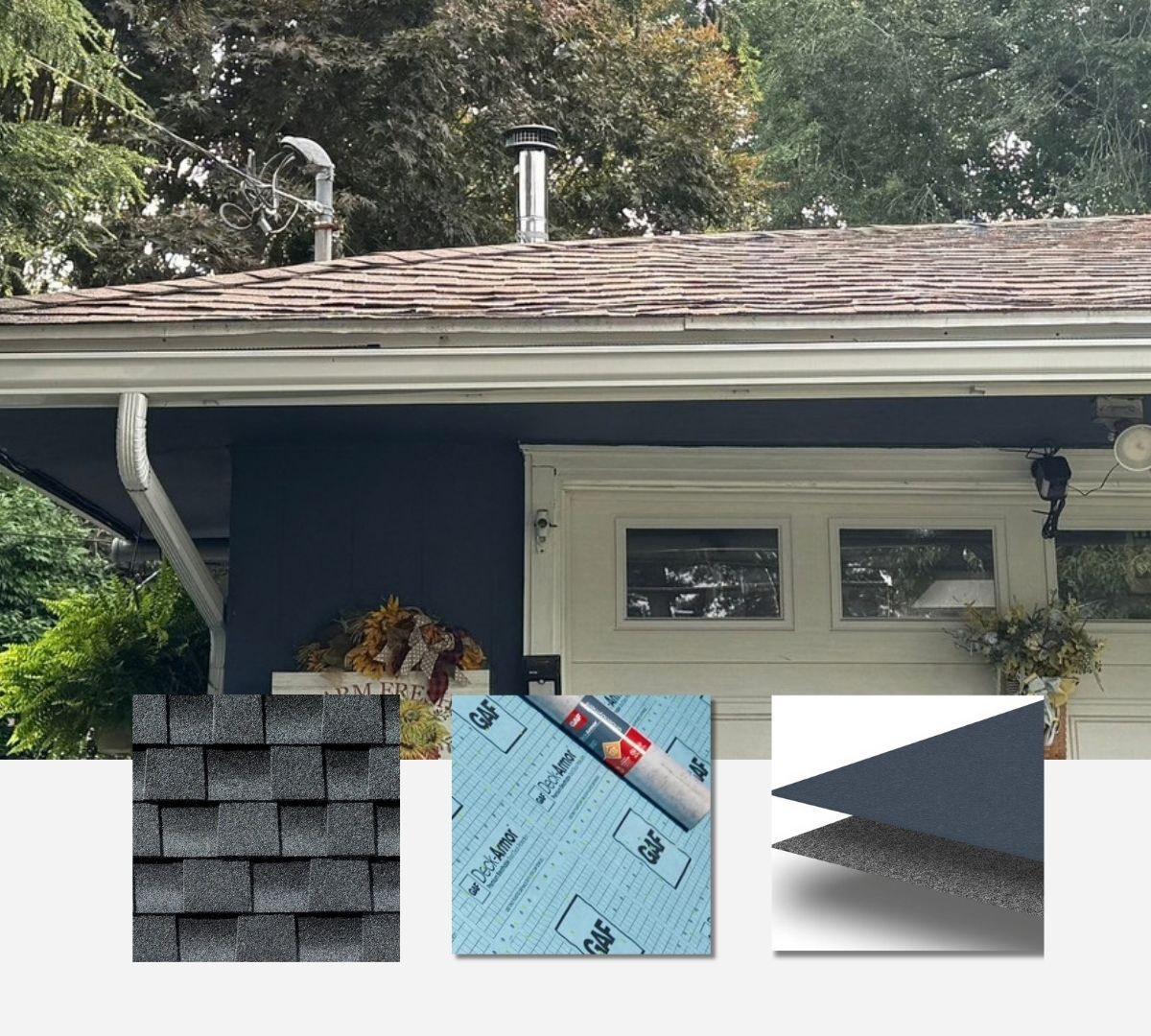
A 1962 Ranch with Water-Damaged Decking & Blocked Attic Intake
Most roofs give you some warning before they fail. This one gave several. The owners of a 1962 ranch in Bellingham, MA called Master Roof for an evaluation, and estimator Nicolas Banks found a roof where the visible wear — moss, worn granules, a few loose shingles — was the least of it. The real story was underneath: original decking showing water damage and sag, and an attic that had effectively been sealed shut at the eaves.
That combination is common in homes of this age across Bellingham, Mendon, and Blackstone, and it is why we inspect the attic on every estimate. A roof is a system. New shingles over a soft deck and a starved attic buy you a few good-looking years and not much else.
What the Inspection Found
The attic told us more than the roof surface did. Working from inside the attic and across the roof, the inspection turned up a set of related problems:
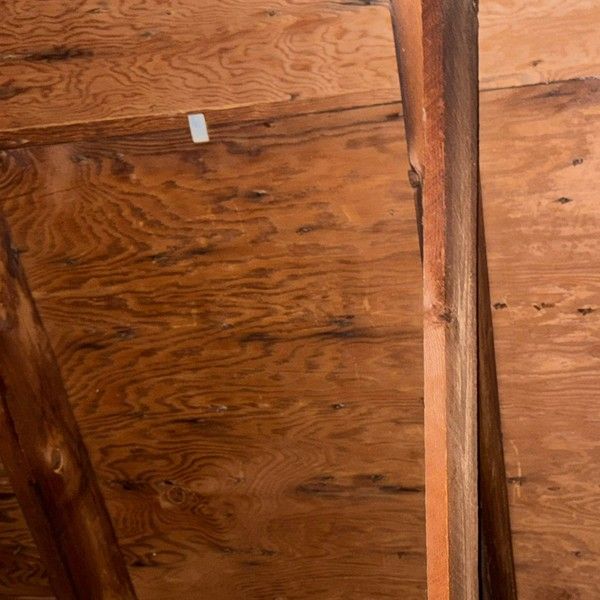
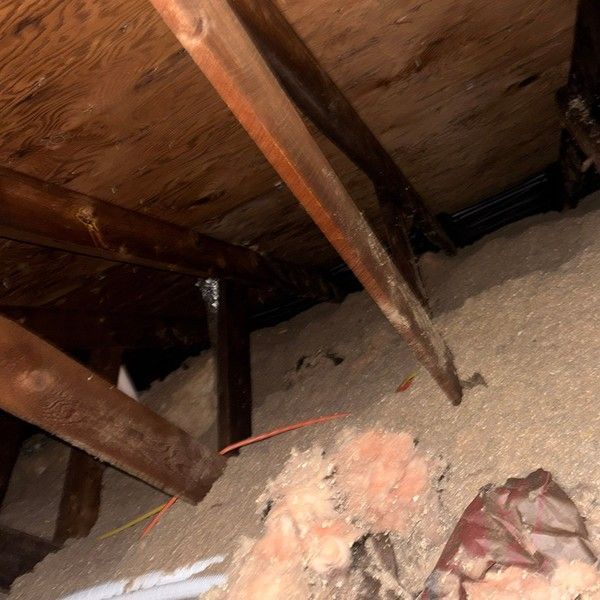
- Water-damaged decking: The original CDX plywood showed staining and moisture damage from the attic side, with sagging in sections - a clear sign the deck had been taking on water for some time and would not hold fasteners reliably.
- Soffit intake completely blocked: Attic insulation ran all the way out to the edge of the eaves, sitting directly against the roof deck and covering the soffit openings. No matter how much exhaust the roof had, no fresh air could get in.
- An outdated ridge cap vent: The exhaust vent at the ridge was a first-generation unit that restricted airflow well below what the roof needed.
- Daylight around a roof vent: Visible daylight around one of the vent penetrations meant a direct opening into the attic -- a path for water during every rain and snow event, and for insects and animals the rest of the time.
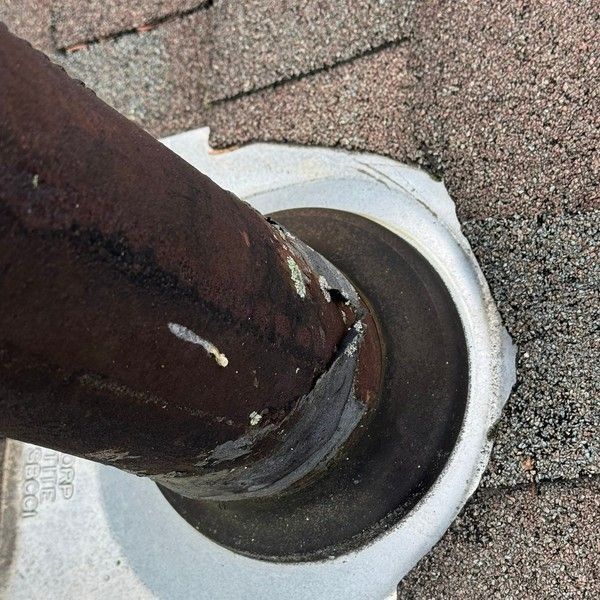
- A cracked pipe boot seal: The rubber seal around the plumbing vent had cracked and pulled away, which is what pipe boots do as UV exposure ages the rubber. It sat directly above the wall cavity below.
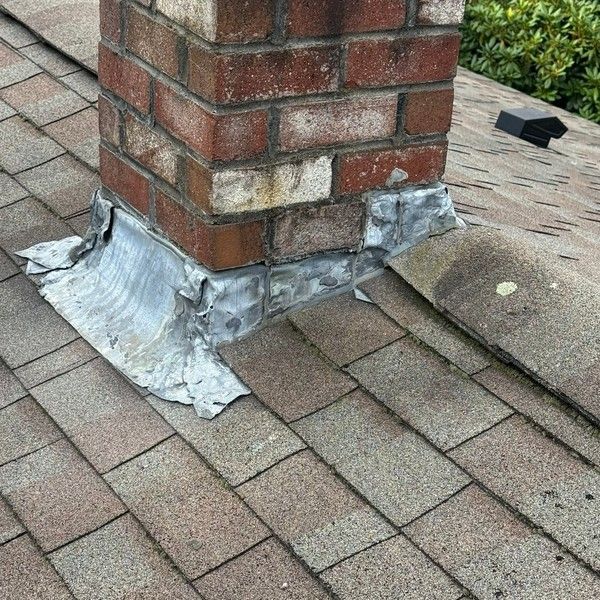
- Deteriorated chimney flashing: The flashing at the chimney base had aged past the point of resealing and needed to be rebuilt properly during the replacement.
- Surface wear, moss, and loose shingles:
Blue-green algae staining and moss growth across the shingle field, with broken seal strips and loose and missing shingles around the affected areas.
The Master Roof Solution
Because the deck itself was compromised and the attic could not breathe, this was a full system rebuild rather than a shingle swap:
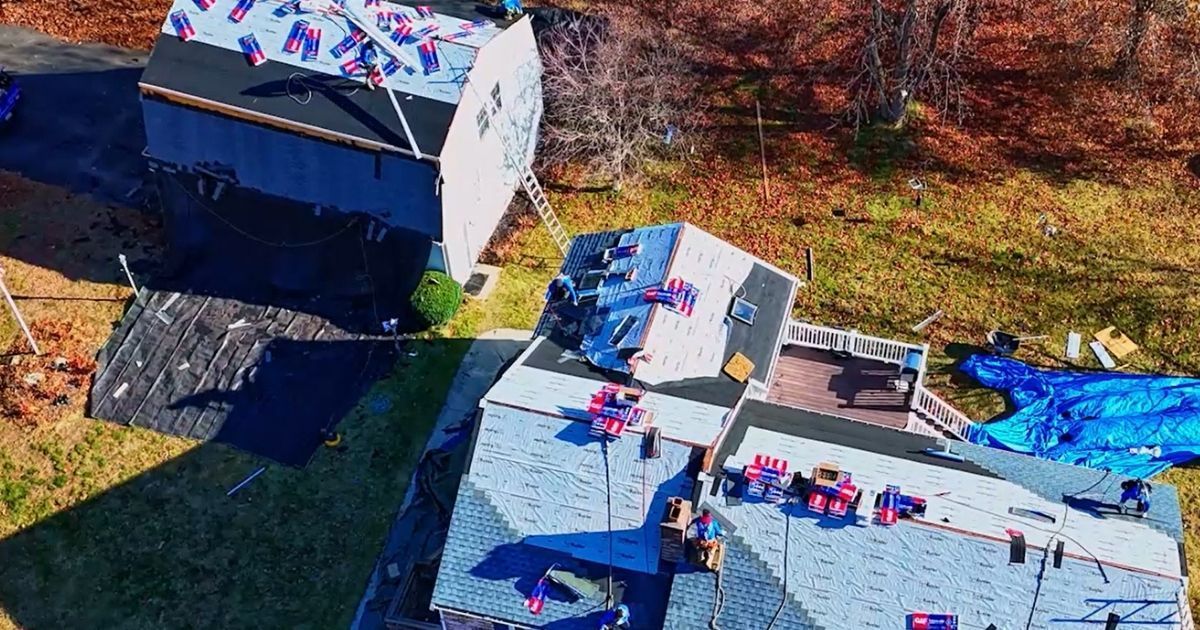
- Complete tear-off to the rafters: We removed the old shingles and then the decking itself, opening the roof down to the framing so every bay could be inspected and corrected.
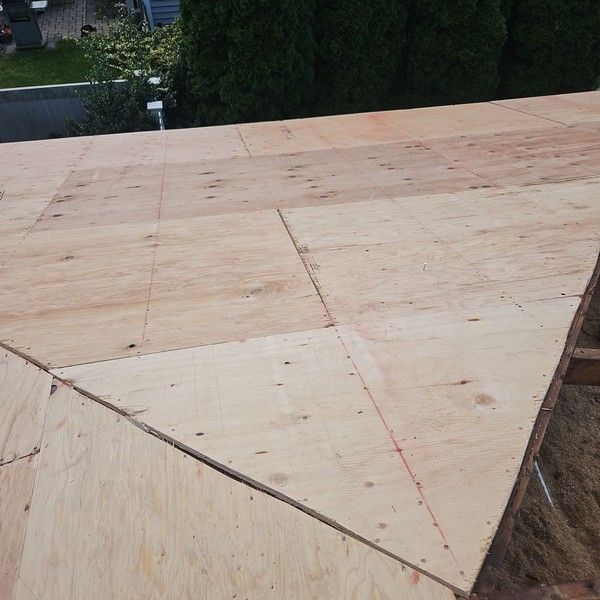
- Full deck replacement: New CDX plywood sheathing was installed across the entire roof, giving the new system a flat, dry, solid nailing surface.
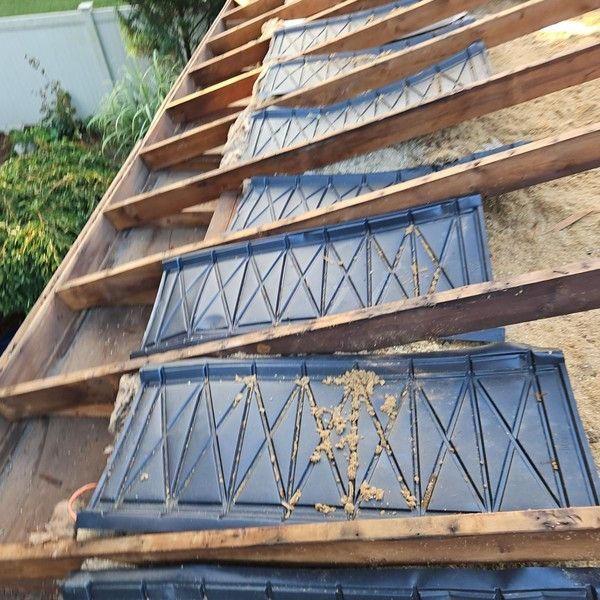
- Reopened soffit intake: With the deck off, we installed rafter vent baffles in every bay at the eaves. Each baffle holds the insulation down and away from the deck and creates a protected channel so air can enter at the soffit and travel up the underside of the roof - the intake half of the 1/300 ventilation rule that this attic had been missing entirely.
- New exhaust at the ridge: The first-generation ridge cap vent was replaced with a new ridge vent so intake and exhaust are balanced, with exhaust never exceeding intake.
- New leak barrier and underlayment: GAF leak barrier at the eaves, valleys, and penetrations, with synthetic underlayment across the full deck.
- New shingle system: A full GAF architectural shingle system installed to manufacturer specification.
- New flashing and pipe boot: Rebuilt chimney flashing in three layers — ice and water membrane up the brick, step flashing woven into each shingle course with lead at the corners, and lead counter flashing over the top. The failed rubber pipe boot was replaced with an Ultimate pipe boot built to last the life of the roof, and the abandoned satellite bracket was removed rather than flashed around.
- Property protection:
The crew tarped and worked around the flower beds along the house for the full tear-off, at the homeowners’ request.
The Result
This Bellingham ranch now has what it did not have before: a sound deck and an attic that breathes. The decking is new across the whole roof, the soffit intake is open and protected in every rafter bay, the ridge exhausts properly, and the two leak-prone penetrations - the chimney and the plumbing vent - were rebuilt rather than resealed. For a Massachusetts roof, that ventilation fix matters as much as the shingles: balanced airflow is the single best defense against ice dams and winter moisture buildup in the attic, and it is what keeps the shingle warranty intact.
Curious what a project like this could cost for your own home?
Try our roof cost calculator, or request a free on-site inspection to get started.
Other Master Roof Projects Nearby
Frequently Asked Questions
Why did the whole roof deck need to be replaced on this home?
The original plywood showed water staining from the attic side and had begun to sag in places. Decking in that condition no longer holds nails reliably, which means a brand-new shingle system installed over it would be fastened into compromised wood. Once moisture damage is widespread rather than isolated to a few sheets, replacing the deck is the only way to give the new roof a sound base.
What does it mean when attic insulation blocks the soffit vents?
Soffit vents under the eaves are where fresh air enters the attic. When insulation is pushed or blown all the way to the edge, it sits on top of those openings and seals them off. The vents are still there and still look fine from the ground, but no air moves through them, so the attic loses the intake half of its ventilation system.
What are rafter vent baffles and why install them during a roof replacement?
A baffle is a rigid channel installed between the rafters at the eave. It holds insulation down and away from the roof deck so there is a clear air path from the soffit up into the attic. Installing them during a replacement is far easier and far more thorough than working from inside a low attic, because with the decking off, every bay is reachable from above.
Why not just add more vents at the ridge instead?
Adding exhaust without intake makes things worse, not better. A ridge vent with no air coming in from below will pull air from wherever it can, often from the conditioned living space through ceiling gaps. Ventilation only works when intake and exhaust are balanced, and exhaust should never exceed intake. That is why the fix here started at the soffits.
How would I know if my older roof has hidden decking damage?
You usually cannot see it from the ground or from the shingle surface. The signs show up in the attic as staining on the underside of the plywood, a musty smell, or daylight visible around vents and penetrations. From outside, a roof plane that looks wavy or dips between rafters often means the deck is soft. An attic inspection is part of every Master Roof estimate for exactly this reason.
Does replacing the decking add a lot to the cost of a roof replacement?
It does add cost, since it is both material and labor, and how much depends on how much of the deck needs to go. Some roofs need a few sheets; this one needed all of it. It is also why a written estimate should tell you how decking is handled and priced before work starts, rather than being discovered as an open-ended surprise mid-project.
How long does a project like this take?
A single-story ranch of this size is typically a short project, though a full deck replacement adds time compared to a straightforward tear-off and re-shingle. Weather, the amount of decking involved, and any structural repairs found once the roof is open all factor in, which is why we confirm the schedule after the inspection rather than before it.
Project Gallery
Other Roofing Projects in Bellingham & Surrounding Towns
At Master Roof, we offer exceptional residential roofing services across Bellingham including roof replacement, repairs, attic ventilation, chimney flashing, skylight installations, roof maintenance, and assessments. Here are some other Master Roof projects in the area.